
Executive Summary
Shockwave therapy (ESWT) in San Diego is typically a brief, in-office treatment that uses pulsed acoustic waves to stimulate healing in chronic tendon and fascia problems. Most patients experience manageable discomfort during treatment, mild short-term soreness afterward, and results that build gradually over multiple sessions—especially when paired with a progressive rehab/loading plan.
Key Takeaways
- Quick, targeted appointments: Visits commonly involve a short symptom review, precise “hot spot” identification, gel application, and 10–20 minutes of pulsed treatment.
- Sensation is adjustable and usually tolerable: The treatment often feels like fast tapping or firm knocking, with the strongest discomfort over the most tender point and real-time intensity adjustments based on feedback.
- Best suited for chronic overuse conditions: ESWT is most commonly used for issues like plantar fasciitis, Achilles tendinopathy, tennis elbow, patellar tendinopathy, hip side pain, and some shoulder tendinopathies.
- Improvement is typically gradual, not instant: Mild soreness can last 24–72 hours, with functional gains often emerging over 1–2 weeks and more meaningful improvement developing across 3–6+ weeks.
- Outcomes depend on plan quality and follow-through: Results are more likely when the diagnosis is correct, sessions are appropriately spaced (often weekly), impact is temporarily moderated after treatment, and therapy is combined with progressive strengthening and load management.
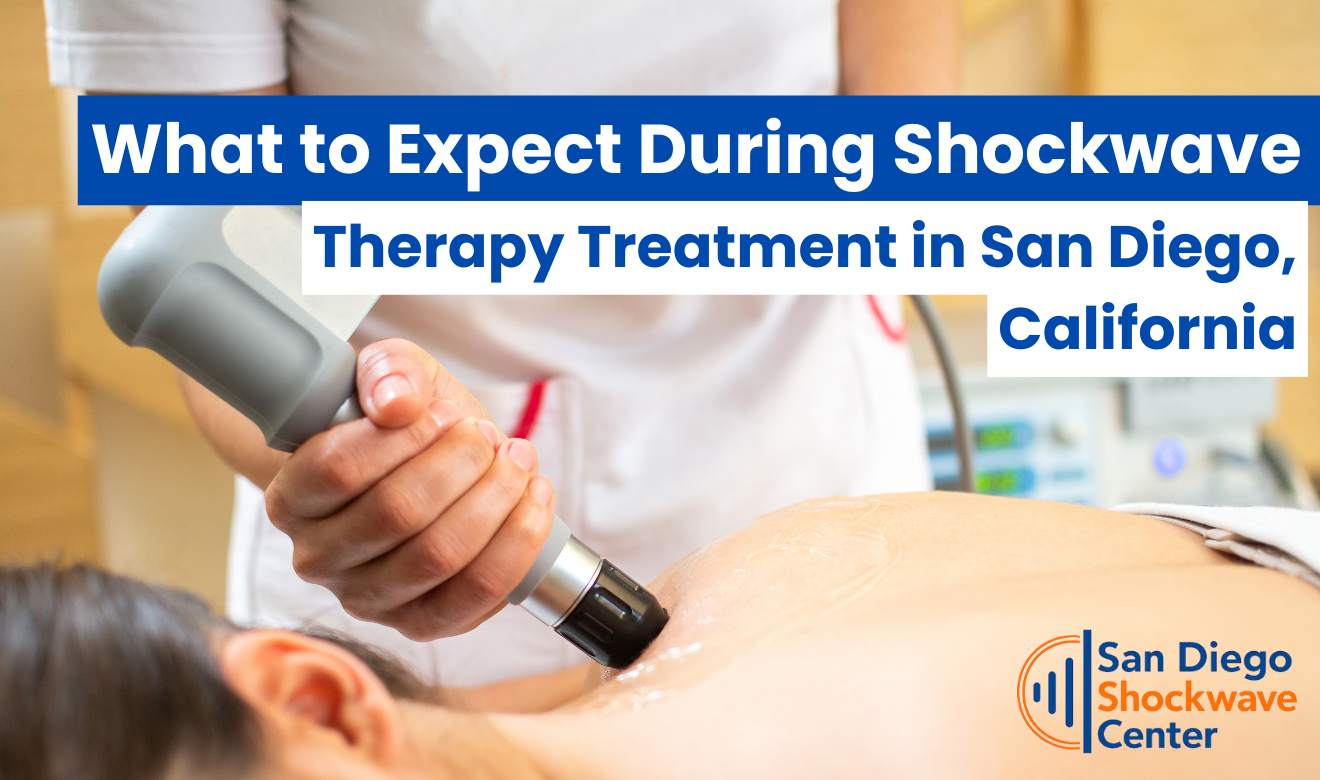
If you’re wondering what to expect shockwave therapy San Diego, plan for a quick, in-office session that targets painful tissue with pulsed sound waves to help reduce pain and speed up healing. You’ll talk through your symptoms first, then the provider will locate the tender area—like the bottom of your heel for plantar fasciitis or the outside of your elbow for tennis elbow. A gel is applied, and a handheld device delivers rhythmic taps or pulses that can feel like fast, firm knocking. Most people describe it as uncomfortable but manageable, and the intensity is usually adjusted in real time based on your feedback.
During treatment, you might feel the strongest sensation right on the “hot spot,” and that’s normal. A typical visit often takes about 10–20 minutes, and you can usually walk out and return to your day right away. For example, runners with heel pain may feel sore for a day or two before noticing easier first steps in the morning, while someone with shoulder tendinopathy might feel looser movement but mild tenderness afterward. You may be advised to avoid high-impact workouts for a short period and to space sessions over several weeks, since results often build gradually rather than overnight.
What shockwave therapy is (and why the “sound waves” matter)
When people search what to expect shockwave therapy San Diego, they usually want to know two things: what it feels like and what it’s actually doing inside the tissue. Shockwave therapy—also called extracorporeal shockwave therapy (ESWT)—uses high-energy acoustic waves to stimulate a healing response in stubborn, painful soft tissue.
In plain terms, the pulses create controlled mechanical stress that can help:
- Kickstart repair processes in chronic tendinopathy (when tissue has stopped healing well on its own)
- Reduce pain signaling over time
- Support improved function and mobility as symptoms calm down
If you want a deeper overview of the science and types of devices, see what is shockwave therapy. For a general medical definition and background, extracorporeal shockwave therapy (ESWT) is a helpful reference.
How the appointment typically works from start to finish
If you’re still clarifying what to expect shockwave therapy San Diego, here’s the most common in-office flow, step-by-step.
1) Quick check-in and symptom review
- Where the pain is and what movements trigger it
- How long it’s been going on (acute vs chronic)
- What you’ve already tried (rest, PT, injections, orthotics, etc.)
- Your activity goals (work demands, sports, training schedule)
2) Targeting the “hot spot”
The provider palpates and/or uses movement testing to find the most tender tissue—often the exact point that reproduces your symptoms. This matters because shockwave is typically aimed at the most symptomatic zone, not just “the general area.” That targeting is one reason many people ask what to expect shockwave therapy San Diego compared with other passive modalities.
3) Gel + device + pulses
- A coupling gel is applied to improve transmission of the waves.
- A handheld applicator delivers pulses in sets.
- Intensity and frequency can be adjusted based on your feedback.
4) Post-session check + simple plan
You’ll usually get brief guidelines on activity modification, soreness expectations, and how to space sessions. Many clinics also pair shockwave with a progressive loading plan (often the “missing piece” for tendons).
What it feels like: pain level, discomfort, and real-time adjustments
The most common “felt” experience behind what to expect shockwave therapy San Diego is this: strong, rhythmic tapping that’s most intense directly over the tender spot.
Common sensations during treatment
- Fast knocking/tapping (most typical description)
- Sharp or stingy discomfort right on the hot spot
- Dull ache spreading a bit into the surrounding tissue
How providers keep it tolerable
- Starting at a lower intensity and ramping up gradually
- Moving the head slightly to avoid staying on one pinpoint too long
- Using your pain feedback to find the “therapeutic but tolerable” level
It’s normal to be curious about what to expect shockwave therapy San Diego if you’re worried about pain. A separate, detailed discussion of discomfort levels and why “more intensity” isn’t always better can be found here: does shockwave therapy hurt.
What conditions are most commonly treated (and where you’ll feel it)
Most people searching what to expect shockwave therapy San Diego are dealing with a chronic overuse injury that hasn’t responded fully to rest, basic rehab, or other conservative care. Common examples include:
- Plantar fasciitis (often the medial heel/bottom of heel)
- Achilles tendinopathy (mid-portion tendon or insertion area)
- Tennis elbow (lateral epicondylalgia; outside of elbow)
- Patellar tendinopathy (front of knee, below kneecap)
- Greater trochanteric pain syndrome (side of hip)
- Rotator cuff tendinopathy (shoulder)
If knee symptoms are your main issue and you’re trying to nail down what to expect shockwave therapy San Diego for that specific area, this guide is helpful: shockwave therapy for knee pain.
What results look like: timeline, milestones, and realistic expectations
One of the biggest misunderstandings behind what to expect shockwave therapy San Diego is expecting instant, permanent relief after one visit. Some people feel looser immediately, but the more typical pattern is gradual improvement across a series.
Typical response timeline (general pattern)
- Same day to 48 hours: localized soreness, tenderness, or a “bruised” feeling
- 1–2 weeks: small functional wins (easier first steps, less pain on stairs, improved grip tolerance)
- 3–6+ weeks: more noticeable pain reduction and better activity tolerance as sessions add up
What the research says (high-level, widely cited findings)
- Plantar fasciitis: Multiple systematic reviews and meta-analyses have reported ESWT can improve pain and function, particularly in chronic cases that didn’t respond to basic conservative care. Outcomes vary by energy level, technique, and patient selection.
- Lateral epicondylalgia (tennis elbow): Evidence suggests ESWT can be helpful for some patients, especially persistent symptoms, though results across studies can be mixed depending on protocol.
Because protocols and devices differ, the most accurate way to understand what to expect shockwave therapy San Diego is to ask how the treatment plan is tailored to your specific diagnosis, symptom duration, and activity goals.
How many sessions you’ll likely need (and why spacing matters)
Another core part of what to expect shockwave therapy San Diego is frequency. Many treatment plans use multiple sessions because the goal is to stimulate a biological response over time, not just provide short-lived symptom masking.
Common scheduling approach
- A series of sessions spaced roughly once per week (sometimes every 1–2 weeks)
- Adjustments based on soreness, response, and your training/work demands
For a condition-by-condition look at session ranges and planning, see how many shockwave sessions.
What to do after treatment: activity rules that help results stick
People often focus on what to expect shockwave therapy San Diego during the appointment—but what you do after can strongly influence how quickly you progress.
Common post-treatment guidance (often used)
- Keep moving: normal daily activity is usually fine
- Avoid high-impact or max-loading for a short window (commonly 24–72 hours), especially if soreness is significant
- Skip anti-inflammatory meds unless advised: some clinicians prefer avoiding NSAIDs around sessions because inflammation can be part of the healing signaling process (follow your medical provider’s direction, especially if you take NSAIDs for other conditions)
- Follow a loading/rehab plan: tendons often improve best with progressive strengthening
If you want a straightforward checklist on sleep, soreness, and training modifications, this helps set expectations for what to expect shockwave therapy San Diego during the recovery window: shockwave therapy recovery basics.
Cost: what pricing depends on in San Diego
Cost is a major part of what to expect shockwave therapy San Diego, and it varies widely by clinic, device type, number of sessions, and whether your care is bundled with rehab services.
Factors that commonly affect price
- Focused vs broader treatment area (one tendon vs multiple regions)
- Number of pulses and energy level used per session
- Total sessions recommended for your diagnosis and symptom duration
- Clinician time (assessment + treatment vs treatment-only)
For a detailed breakdown of typical cost drivers and questions to ask before you commit, see shockwave therapy cost. If you’re comparing budget options, also consider tradeoffs like device quality, individualized assessment, and rehab integration—because “cheap” isn’t always equal value when deciding what to expect shockwave therapy San Diego.
Why some people don’t respond (and how to improve your odds)
A practical part of what to expect shockwave therapy San Diego is understanding that response isn’t guaranteed. Non-response doesn’t always mean “it doesn’t work”—it can mean the diagnosis, dosage, or loading plan didn’t match the problem.
Common reasons results stall
- Wrong pain generator (e.g., nerve referral, joint arthritis, stress fracture, radiculopathy)
- Too much activity too soon after sessions, repeatedly flaring the tissue
- No progressive strengthening (tendons often need loading, not just passive treatment)
- Symptoms are too acute (shockwave is often used more for chronic cases)
- Medical factors affecting healing (e.g., uncontrolled diabetes, smoking, poor sleep)
What “good candidates” often have in common
- Pain lasting months rather than days
- A clear, localized tender structure (plantar fascia, Achilles, elbow extensor tendon)
- Willingness to follow a short-term activity plan and a strengthening program
How shockwave compares to physical therapy and injections
If you’re researching what to expect shockwave therapy San Diego, you might also be deciding between shockwave, exercise-based rehab, corticosteroid injections, PRP, or other options. Shockwave is often used as a “bridge” to make loading exercises more tolerable and to address chronic pain drivers.
Simple comparison points
- Physical therapy: Best for restoring capacity (strength, mobility, mechanics). Takes time and consistency.
- Shockwave: In-office stimulus that may reduce pain and support tendon/fascia recovery—often paired with rehab.
- Steroid injections: May reduce pain short-term for some conditions, but can be a poor fit for certain tendons and repeated use may carry risk (depends on location and diagnosis).
- PRP: A biologic approach; evidence and protocols vary by condition.
If you want a direct head-to-head discussion, this resource supports decision-making about what to expect shockwave therapy San Diego compared to a rehab-only plan: shockwave vs physical therapy.
Safety: who should avoid it and what side effects are normal
Safety concerns are central to what to expect shockwave therapy San Diego. For most people, side effects are mild and temporary, but there are important exceptions.
Common, expected side effects
- Soreness for 24–72 hours
- Temporary redness or swelling
- Occasional bruising
- A short-term pain flare before improvement
Common reasons it may be postponed or avoided
- Suspected fracture, infection, or tumor in the area
- Certain bleeding disorders or anticoagulant considerations (needs medical screening)
- Pregnancy precautions for certain regions (clinical judgment varies)
- Open wounds/skin issues at the treatment site
For a more complete screening-style overview of risks and precautions, see shockwave therapy safety guide.
A quick “expectations” table you can screenshot
| What to expect shockwave therapy San Diego question | Typical answer | What you can do to optimize it |
|---|---|---|
| How long is a visit? | Often ~10–20 minutes of treatment time, plus brief assessment | Wear easy-access clothing; arrive ready to describe triggers/limitations |
| Does it hurt? | Uncomfortable but usually tolerable; strongest on the tender “hot spot” | Give real-time feedback so intensity can be tuned |
| When will I feel better? | Often gradual; meaningful change may take weeks | Follow the loading plan; avoid repeated flares between sessions |
| What should I avoid after? | Usually high-impact/max effort for 24–72 hours (varies) | Swap in low-impact cardio and keep steps/volume reasonable if sore |
What to ask your provider before you start
To get the clearest answer to what to expect shockwave therapy San Diego for your body and your condition, ask these direct questions:
- What diagnosis are we treating, and what makes you confident it’s the right target?
- Is this focused or radial shockwave, and why did you choose it?
- How many sessions do you recommend before re-checking progress?
- What activity should I modify, and for how long after each session?
- What rehab/strength plan will we pair with treatment?
- What would be the next step if I’m not improving by session 3–4?
Why this works best as a plan, not a single appointment
The most accurate way to summarize what to expect shockwave therapy San Diego is: a short appointment, manageable discomfort, mild temporary soreness, and results that build with the right dosing plus the right follow-through.
Shockwave is often most useful when it’s part of a broader strategy that includes:
- Progressive strengthening (especially for tendon problems)
- Load management (reducing the specific trigger volume temporarily)
- Addressing contributing factors (footwear, mechanics, work demands, recovery habits)
To understand how the treatment itself is delivered and what it targets, you can also review shockwave therapy basics.
Finish Strong: How to feel confident walking into session one
If you’ve been searching what to expect shockwave therapy San Diego, the best mindset is prepared and patient. Prepared—because you’ll get better results when you can clearly describe your symptoms and follow a realistic activity plan. Patient—because chronic tissue irritation usually improves in steps, not overnight.
In most cases, what to expect shockwave therapy San Diego comes down to a predictable pattern: brief treatment visits, tolerable discomfort that’s adjusted to you, and gradual improvement when sessions are paired with a smart strengthening program.
Credentials that matter when choosing care: Look for a licensed clinician qualified to diagnose musculoskeletal conditions (such as a physical therapist, sports medicine clinician, or physician) who regularly treats tendinopathy and plantar fascia pain, uses evidence-informed shockwave protocols, and can prescribe and progress a structured rehabilitation plan—not just deliver the device treatment.
Frequently Asked Questions
Ready to See What Shockwave Can Do for Your Pain?
If you’re still figuring out what to expect from shockwave therapy in San Diego, the fastest way to get clarity is a quick, professional evaluation—so you know what’s being treated, how many sessions you’ll likely need, and what results are realistic for your specific condition. At San Diego Shockwave Therapy Center, you’ll get a targeted plan built around your symptoms, your activity level, and the kind of follow-through that helps results actually stick. Book a visit and walk in with a clear game plan—not guesswork.