
Executive Summary
ESWT (extracorporeal shockwave therapy) is a non-surgical, non-injection treatment that uses acoustic waves to support healing in chronic tendon and fascia pain. It’s typically most effective when used for evidence-supported conditions and combined with a structured rehab/loading plan rather than as a standalone “quick fix.”
Key Takeaways
-
ESWT is acoustic therapy—not surgery or “electric shock” — A handheld device delivers sound-wave pulses through the skin to stimulate a controlled healing response without incisions or implants.
-
Best suited for chronic tendon and fascia conditions — It’s commonly used for issues like plantar fasciitis, Achilles and patellar tendinopathy, tennis elbow, certain shoulder tendinopathies, and lateral hip pain, especially when symptoms persist for months.
-
Treatment is usually tolerable but can feel intense — Most people describe strong tapping or pulsing pressure during sessions with mild post-treatment soreness for 24–48 hours.
-
Results are gradual and often require multiple sessions — Typical plans involve about 3–6 sessions (often weekly), with improvement building over weeks rather than immediately.
-
Outcomes depend heavily on the rehab plan and provider quality — The strongest results usually come from clinician-led evaluation, appropriate patient selection, safety screening, and progressive loading/strengthening between treatments.
ESWT shockwave therapy is a non-surgical treatment that uses targeted acoustic waves to stimulate healing in injured or painful tissue. In this eswt shockwave therapy san diego guide, you’ll learn what it is, what it feels like, and why many people consider it for stubborn pain that hasn’t improved with rest, stretching, or standard physical therapy.
In simple terms, a provider places a handheld device on the sore area and delivers short pulses that can help increase blood flow and trigger the body’s repair response. For example, someone with chronic plantar fasciitis may use ESWT to address heel pain that flares with the first steps in the morning. Another example is tennis elbow, where gripping a coffee mug, lifting a grocery bag, or typing all day can keep the tendon irritated.
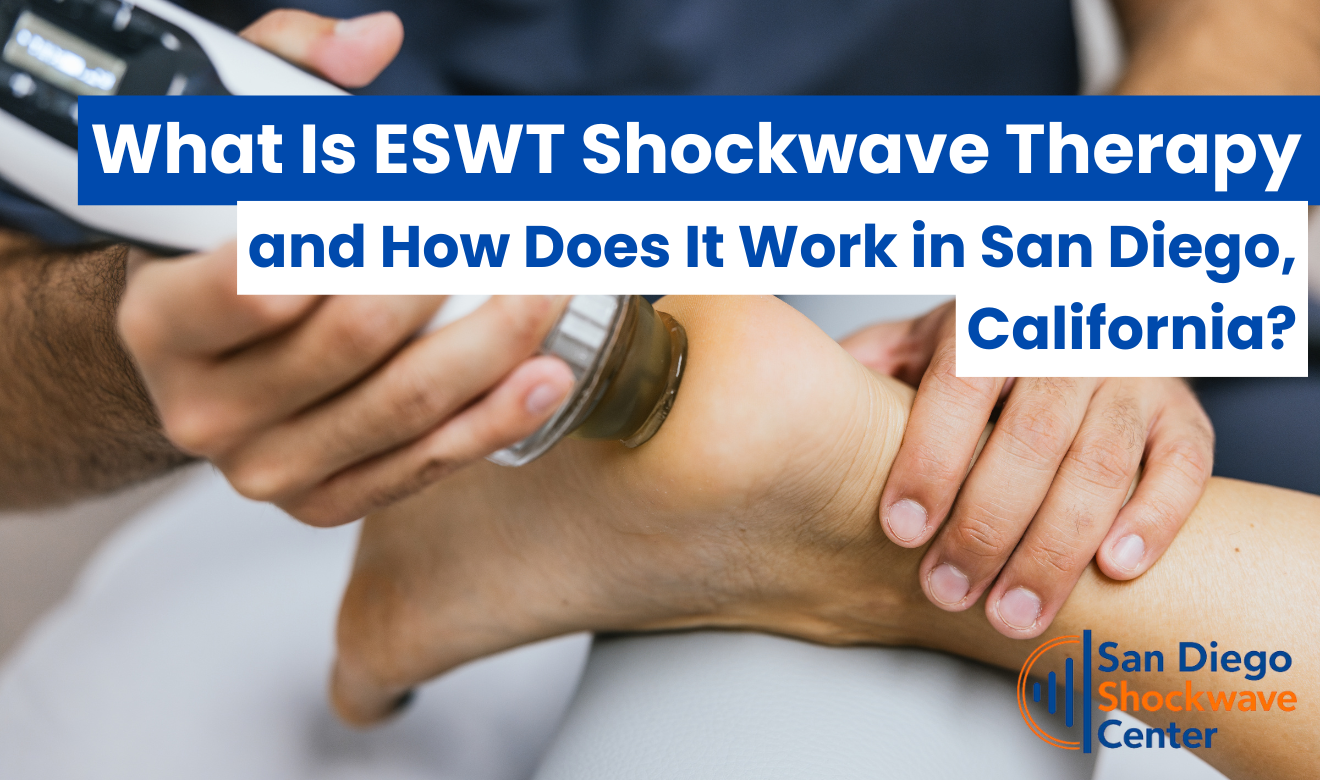
Sessions are typically quick, and most people describe the sensation as strong tapping or pulsing pressure. You might feel some discomfort during treatment and mild soreness afterward, similar to how you can feel after a deep tissue massage. The goal is to reduce pain and improve function over time, especially for issues like Achilles tendinopathy, patellar tendon pain, or shoulder tendon irritation.
What ESWT Shockwave Therapy Is (and What It Isn’t)
In this eswt shockwave therapy san diego guide, it helps to clear up a common misconception: ESWT isn’t “electric shock” and it isn’t surgery. ESWT stands for extracorporeal shockwave therapy, which uses acoustic (sound) waves to create controlled micro-stimulation in targeted tissue.
These pulses are delivered through the skin using a handheld applicator. The goal is to support the body’s natural repair process—especially in tendons and connective tissue that have become painful and slow to heal.
- Not surgery: no incisions, no implants, no stitches.
- Not a steroid injection: it doesn’t “numb” inflammation in the same way; it aims to change the local healing environment over time.
- Not a quick fix for every condition: it’s best supported for specific chronic tendon and fascia problems.
If you want a deeper overview of the treatment itself, you can review shockwave therapy basics before booking anything.
How ESWT Works for Stubborn Tendon and Fascia Pain
A simple way to think about ESWT is that it “wakes up” tissue that has been stuck in a chronic pain cycle. In many overuse injuries, the area may have impaired tissue quality and pain signaling that persists even after rest.
Researchers describe several proposed effects of ESWT, including improved local blood flow, changes in pain signaling, and biological responses that may support tendon remodeling. These mechanisms are still actively studied, but clinical use has expanded because many patients do improve when other basics haven’t worked.
For a technical definition and background, extracorporeal shockwave therapy is widely described as a noninvasive method using acoustic waves for musculoskeletal conditions.
Radial vs Focused Shockwave: What’s the Difference?
Many people searching this eswt shockwave therapy san diego guide want to know what type they’re getting. The two most common categories are:
- Radial shockwave: energy disperses more broadly and tends to treat more superficial, wider regions.
- Focused shockwave: energy can be targeted more precisely and deeper, depending on the device and settings.
Your condition (and exact pain location) usually determines what’s appropriate.
What ESWT Feels Like During Treatment
Most patients describe ESWT as rhythmic tapping, thumping, or pulsing pressure. The intensity can usually be adjusted, and clinicians often start lower and increase as tolerated.
In practical terms, here’s what people often notice:
- First 1–2 minutes: “sharp tapping” until you acclimate.
- Mid-session: discomfort often becomes more tolerable (still intense, but manageable).
- Afterward: mild soreness, warmth, or tenderness similar to post-workout or deep tissue massage.
In this eswt shockwave therapy san diego guide, the key expectation is that ESWT can be uncomfortable, but it’s typically quick. A provider can also modify pressure, frequency, and total pulses to keep it within a tolerable range.
What Conditions ESWT Is Commonly Used For
People usually look up an eswt shockwave therapy san diego guide because they’re dealing with pain that keeps coming back—often tendon-related. ESWT is commonly used for chronic:
- Plantar fasciitis (heel pain, worst with first steps in the morning)
- Achilles tendinopathy (pain 2–6 cm above the heel, aggravated by running/jumping)
- Patellar tendinopathy (jumper’s knee)
- Lateral epicondylitis (tennis elbow)
- Rotator cuff tendinopathy and some calcific shoulder conditions
- Greater trochanteric pain syndrome (lateral hip pain, sometimes involving gluteal tendons)
Real-World Evidence: What Research Suggests
ESWT has been studied heavily in plantar fasciitis and tendinopathies. For example, systematic reviews and clinical guidelines frequently discuss ESWT as an option for chronic plantar heel pain, particularly when first-line care hasn’t been enough. Outcomes vary by diagnosis, severity, device type (focused vs radial), and whether rehab loading is done alongside treatment.
One practical pattern seen across studies: ESWT tends to be more helpful in chronic cases (often symptoms lasting months) rather than brand-new injuries that may respond to simpler changes.
Why Many People Try ESWT After “Everything Else”
This eswt shockwave therapy san diego guide is for the common scenario: you’ve rested, stretched, iced, bought supportive shoes, maybe even tried physical therapy—and the pain still returns as soon as activity ramps up.
People often consider ESWT because it can:
- Target stubborn tissue pain without injections or surgery
- Fit into busy schedules (short appointments)
- Support return to activity when paired with a smart loading plan
It’s not unusual for a runner with chronic Achilles pain, for example, to feel fine during a rest week—then flare up immediately when speedwork or hills return. ESWT is often chosen as a “next step” when the cycle keeps repeating.
How Many Sessions Are Typical (and How Fast Results Happen)
One of the biggest search-intent questions behind an eswt shockwave therapy san diego guide is timeline. Many protocols use a short series of treatments rather than a one-and-done approach.
Common clinical patterns include:
- 3–6 sessions total
- About 1 session per week (varies by provider and diagnosis)
- Results build gradually over several weeks
Some people feel meaningful improvement after the first 1–2 sessions. Others notice change later—often after completing the series—because tissue remodeling and pain modulation can take time.
For a more detailed breakdown of treatment planning, see how many shockwave sessions are commonly recommended.
What to Do Before and After ESWT (So You Don’t Waste the Sessions)
This eswt shockwave therapy san diego guide would be incomplete without the practical “dos and don’ts.” ESWT works best when you treat it like a rehab tool—not a standalone magic wand.
Before Your Appointment
- Know your exact pain spot: be ready to point to the most tender location and describe what provokes it.
- Bring your shoes/orthotics if the issue is foot/heel-related.
- List prior treatments tried (PT, injections, imaging, activity changes).
After Your Appointment
- Expect mild soreness for 24–48 hours in many cases.
- Avoid “testing it” immediately with aggressive sprinting, max jumps, or heavy eccentric work unless your clinician specifically programs it.
- Follow a loading plan (often progressive strengthening) to keep gains moving in the right direction.
Many clinics advise limiting anti-inflammatory medications around treatment because part of ESWT’s goal is to stimulate a healing response (always follow your clinician’s medical advice, especially if you take medications for other conditions).
Cost: What ESWT Typically Runs in San Diego
Pricing is a major reason people search an eswt shockwave therapy san diego guide. Costs vary widely based on the device type, provider credentials, session length, and how many areas are treated.
In many U.S. markets, ESWT is often offered as a cash-based service. Instead of guessing numbers here, use this practical checklist to compare clinics:
- Is the price per session or per treatment plan?
- Does it include an evaluation and a rehab plan?
- Is it focused or radial shockwave?
- Are follow-up reassessments included?
- Are you paying extra for treating a second body part?
If cost is your main concern, it can help to read a dedicated overview of shockwave therapy cost considerations so you know what actually drives pricing.
What Makes Someone a Good (or Poor) Candidate for ESWT
A high-quality eswt shockwave therapy san diego guide should be honest: ESWT isn’t for everyone.
Often a good fit
- Symptoms lasting 3+ months (chronic tendinopathy or plantar fasciitis patterns)
- Pain tied to load (walking, running, jumping, gripping)
- Limited improvement after consistent strengthening/mobility work
- Clear, localized tenderness that matches the suspected tissue source
May not be a good fit (or needs extra medical screening)
- Red-flag symptoms (unexplained swelling, fever, night pain, recent trauma with inability to bear weight)
- Suspected fracture or major structural tear requiring different care
- Active infection or open wounds in the treatment area
- Certain medical conditions where ESWT may be contraindicated (your clinician should screen)
Safety details matter. If you’re unsure whether ESWT is appropriate for your health history, review a clinician-focused overview like this shockwave therapy safety guide and discuss it with your provider.
How ESWT Compares to Physical Therapy, Injections, and Surgery
Many readers using this eswt shockwave therapy san diego guide are weighing options. Here’s a structured comparison that’s easy to scan.
| Option | What it’s trying to do | Best fit / watch-outs |
|---|---|---|
| ESWT | Stimulate repair signaling, reduce pain sensitivity, improve function over time | Often used for chronic tendinopathy/plantar fasciitis; can be uncomfortable; results are gradual |
| Physical therapy (loading/strengthening) | Restore capacity through progressive exercise, mobility, and movement retraining | Core treatment for many tendon issues; requires consistency; may be combined with ESWT |
| Corticosteroid injection | Short-term reduction of pain/inflammation | May help short-term in some conditions; may not address tissue capacity; risks vary by site |
| Surgery | Correct structural problems when conservative care fails | Reserved for specific cases; longer recovery; higher cost/risks |
If you want a more direct side-by-side discussion, this breakdown of shockwave vs physical therapy can help you decide which path matches your condition and timeline.
Why Your Results Depend on the Rehab Plan (Not Just the Device)
One of the most important takeaways from this eswt shockwave therapy san diego guide: the device delivers stimulation, but your daily habits determine whether the tissue becomes more resilient.
Two brief examples of how this plays out:
- Plantar fasciitis scenario: ESWT may reduce heel pain, but calf strength, foot intrinsic strength, load management (steps, standing time), and shoe strategy often determine whether the improvement lasts.
- Tennis elbow scenario: ESWT may calm pain with gripping, but forearm strengthening, workstation changes, and gradual return to lifting are usually what keep symptoms from bouncing back.
In other words, ESWT can open the door—rehab walks you through it.
What to Look For in a San Diego Provider
People searching an eswt shockwave therapy san diego guide often ask, “How do I pick the right place?” Focus on clinical process, not marketing.
Green flags include:
- A thorough exam that identifies the likely pain generator (not just “treat where it hurts”)
- Clear goals (pain reduction plus measurable functional changes)
- Progressive loading plan tailored to your sport/work demands
- Device transparency (radial vs focused, settings explained)
- Safety screening and contraindication review
Ready to Make ESWT Make Sense?
To recap this eswt shockwave therapy san diego guide: ESWT is a non-surgical option that may help chronic tendon and fascia pain when basic care hasn’t been enough. It usually feels like strong tapping, it’s typically done in a short series of sessions, and the best results tend to come when it’s paired with a smart rehab/loading plan.
From an EEAT standpoint, the most trustworthy approach is clinician-led: a licensed medical professional or licensed physical therapist should evaluate your condition, rule out red flags, confirm that your symptoms match evidence-supported indications, and build a progression plan that measures real function (walking tolerance, running volume, calf strength, grip strength, jump tolerance)—not just pain scores.
If you’re using this eswt shockwave therapy san diego guide to decide whether to take the next step, prioritize a provider who can explain the “why,” set expectations clearly, and integrate ESWT into a complete recovery strategy—not a standalone quick fix.
Frequently Asked Questions
Stop Guessing and Get a Plan That Actually Works
If you’re dealing with stubborn tendon or heel pain and you’re ready to move past endless stretching and “wait and see,” ESWT can be a smart next step—when it’s done with the right evaluation and a clear rehab strategy. At San Diego Shockwave Therapy Center, you’ll get a focused assessment, straightforward expectations, and a treatment plan designed to help you get back to walking, running, lifting, and living with less pain.