
Shockwave Therapy vs Physical Therapy: Which Heals Your Pain Faster?
When you’re stuck choosing between shockwave therapy vs physical therapy, the short answer is this: choose shockwave therapy when you have a stubborn, chronic tendon or soft-tissue injury that hasn’t improved after months of conservative care, and choose physical therapy when you need to rebuild strength, mobility, and correct the movement patterns that caused the injury in the first place. For many San Diego patients, the best outcome actually comes from combining both. This guide breaks down how each treatment works, what it costs, and exactly when one outperforms the other—so you can make a confident, informed decision instead of guessing.
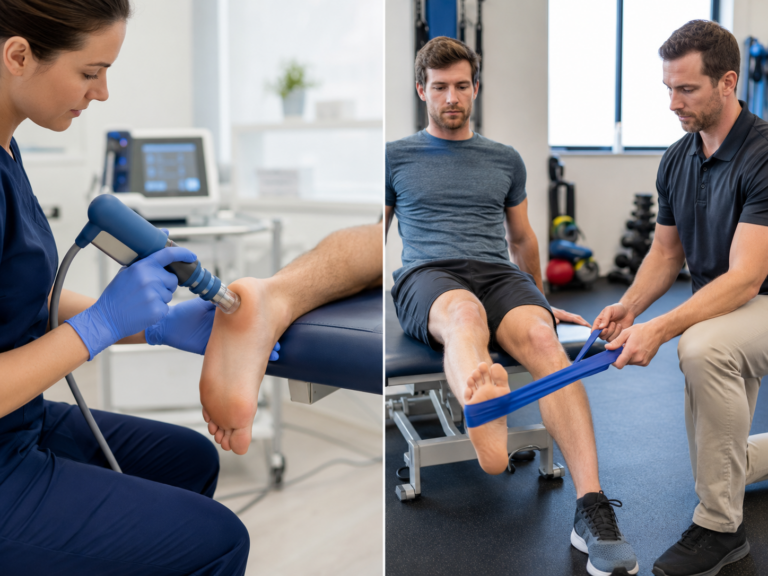
Understanding Shockwave Therapy

Shockwave therapy—clinically known as Extracorporeal Shockwave Therapy (ESWT)—uses high-energy acoustic pressure waves delivered through the skin directly into injured tissue. These pulses are not electric shocks; they’re mechanical sound waves that trigger a controlled micro-trauma response, stimulating blood flow, breaking down calcium deposits, and prompting the body to regenerate collagen and heal areas that have stalled.
How it works: During a typical session, a handheld applicator delivers focused or radial pulses to the target area for roughly 10 to 20 minutes. Most patients feel a tapping or thumping sensation that ranges from mild to moderately intense. There’s no anesthesia, no incision, and no downtime—you can drive yourself home and often return to light activity the same day.
Typical costs: In San Diego, shockwave therapy generally runs $200 to $400 per session, with most conditions requiring 3 to 6 sessions spaced about a week apart. Many clinics offer discounted multi-session packages. Importantly, shockwave is frequently classified as elective or investigational, so it is often not covered by insurance—meaning you’ll typically pay out of pocket.
Core benefits: It’s non-invasive, fast, and especially effective for chronic conditions that have resisted other treatments. It targets the source of pain at the tissue level rather than just managing symptoms.
Ideal use cases: Plantar fasciitis, Achilles tendinopathy, tennis and golfer’s elbow, calcific shoulder tendinitis, patellar tendinopathy (“jumper’s knee”), and other chronic tendon issues. It shines when an injury has lingered for three months or longer.
Understanding Physical Therapy
Physical therapy (PT) is a hands-on, movement-based rehabilitation discipline performed by a licensed Doctor of Physical Therapy (DPT). Rather than targeting a single point of tissue, PT addresses the whole kinetic chain—the muscles, joints, and movement patterns surrounding your injury—to restore function and prevent the problem from returning.
How it works: A physical therapist begins with a thorough evaluation, then builds a customized program that may include therapeutic exercise, manual therapy (joint mobilization and soft-tissue work), stretching, gait retraining, and modalities like ultrasound or dry needling. You actively participate, performing guided exercises in the clinic and a prescribed home program between visits.
Typical costs: A San Diego PT session typically costs $75 to $150 out of pocket, but because physical therapy is widely covered by insurance, most patients pay only a copay of roughly $20 to $75 per visit. Treatment usually spans several weeks to a few months, with one to three visits per week.
Core benefits: PT builds lasting strength, improves flexibility and balance, and—critically—corrects the underlying biomechanical issues that caused your injury. It’s evidence-based, insurance-friendly, and broadly applicable across nearly every musculoskeletal condition.
Ideal use cases: Post-surgical rehab, recovery from sprains and strains, chronic back and neck pain, balance and mobility deficits, sports-injury recovery, and any situation where weakness or faulty movement mechanics need to be retrained.

| Attribute | Shockwave Therapy | Physical Therapy |
|---|---|---|
| Upfront Cost | $200–$400 per session | $75–$150/session (often a $20–$75 copay) |
| Total Treatment Course | 3–6 sessions over a few weeks | Several weeks to months (1–3x/week) |
| Insurance Coverage | Often not covered (out of pocket) | Widely covered by most plans |
| Invasiveness | Non-invasive, no downtime | Non-invasive, active participation |
| Time Per Session | 10–20 minutes | 30–60 minutes |
| Best For | Chronic, localized tendon injuries | Strength, mobility, and root-cause correction |
| Patient Effort Required | Minimal—passive treatment | High—you do the exercises |
| Results Timeline | Often noticeable within weeks | Gradual over weeks to months |
Pros and Cons Breakdown
Pros of Shockwave Therapy
- Fast sessions: Each visit takes only 10 to 20 minutes, ideal for busy schedules.
- Targets stubborn injuries: Highly effective for chronic tendinopathies that haven’t responded to other care.
- Non-invasive with no downtime: No surgery, no anesthesia, and you resume normal activity quickly.
- Few sessions needed: Many patients see results in just 3 to 6 treatments.
Cons of Shockwave Therapy
- Out-of-pocket cost: Frequently not covered by insurance, so the per-session price adds up.
- Temporary discomfort: The pulses can feel intense during treatment for sensitive areas.
- Not a fix for weakness: It heals tissue but doesn’t rebuild the strength or mechanics that prevent re-injury.
- Not for everyone: Generally avoided during pregnancy, over open wounds, or with certain blood-clotting conditions.
Pros of Physical Therapy
- Insurance-friendly: Most plans cover PT, keeping out-of-pocket costs low.
- Addresses the root cause: Corrects the movement patterns and weaknesses behind your injury.
- Builds lasting resilience: Strength and mobility gains help prevent recurrence.
- Broadly applicable: Works for nearly any musculoskeletal issue, from sprains to post-surgical recovery.
Cons of Physical Therapy
- Slower results: Improvement is gradual and requires patience and consistency.
- Requires your effort: Success depends on you completing exercises in-clinic and at home.
- Time commitment: Treatment can span weeks or months of regular visits.
- May stall on chronic tendinopathy: Some deep-seated tendon injuries plateau without an added intervention like shockwave.
Which Option Is Better? (The Ultimate Showdown)
Here’s the honest truth that many clinics won’t tell you: in the debate of shockwave therapy vs physical therapy, these treatments aren’t really competitors—they’re often teammates. But when you do have to prioritize one, the decision comes down to your specific injury, your budget, and your timeline.
Choose shockwave therapy if your priority is resolving a chronic, localized tendon problem—like plantar fasciitis or tennis elbow—that has dragged on for months despite rest, stretching, and other conservative care. If you want a fast intervention with minimal time commitment and you’re comfortable paying out of pocket, shockwave is the targeted tool that can break a healing plateau. San Diego’s famously active, year-round outdoor lifestyle—surfing in La Jolla, trail running in Mission Trails, beach volleyball in Pacific Beach—produces exactly the kind of overuse tendon injuries that respond beautifully to this treatment.
Choose physical therapy if your goal is to rebuild strength, restore range of motion, recover from surgery, or fix the underlying mechanics that caused your pain. If staying within an insurance budget matters and you’re willing to invest the effort over several weeks, PT delivers durable, whole-body results that protect you from re-injury.
The cost-vs-benefit verdict: Physical therapy offers a lower-cost, insurance-covered foundation that benefits almost everyone, while shockwave therapy is a higher-cost, high-impact specialist for chronic tissue injuries. For the best long-term value, many San Diego patients start with—or combine—physical therapy to address the root cause, while adding shockwave therapy to accelerate healing in the specific area that’s stuck. You can learn more about how shockwave therapy works and read a deeper breakdown comparing shockwave vs physical therapy in San Diego to see which path fits your situation.
Internal Resources & Next Steps
To dig deeper into your options, explore these San Diego resources: discover what shockwave therapy is and how it works, review the typical number of sessions you may need, and check current shockwave therapy costs in San Diego. If you’re worried about comfort, our guide on whether shockwave therapy hurts and our safety guide cover what to expect. Dealing with a specific condition? See our pages on shockwave therapy for plantar fasciitis and shockwave therapy for knee pain. You can also review the full list of benefits, read real patient reviews, and learn when to start treatment.
Ready to Find Relief in San Diego?
If chronic pain is keeping you off the beaches, trails, and courts you love, you don’t have to navigate this decision alone. Our San Diego team will evaluate your injury and recommend the right path—whether that’s shockwave therapy, a referral for physical therapy, or a combination of both. Visit our best shockwave therapy clinic in San Diego page or schedule a consultation to get a personalized assessment and start moving pain-free again.
Conclusion & Recommendation
In the matchup of shockwave therapy vs physical therapy, there’s no universal winner—only the right tool for your specific situation. Physical therapy is the broadly effective, insurance-friendly foundation that rebuilds strength and corrects root causes, making it the smart first step for most injuries. Shockwave therapy is the targeted accelerator for chronic, stubborn tendon problems that have stopped responding to conservative care. Our recommendation for most San Diego patients: lean on physical therapy to fix the underlying mechanics, and add shockwave therapy when a localized injury needs a faster, focused push toward healing. The best way to know for certain is a professional evaluation tailored to your body and your goals.
Frequently Asked Questions
1. Is shockwave therapy better than physical therapy for plantar fasciitis?
1. Is shockwave therapy better than physical therapy for plantar fasciitis?
For chronic plantar fasciitis that hasn’t improved after months of stretching and conservative care, shockwave therapy is often more effective at breaking the healing plateau. However, physical therapy addresses the calf tightness and foot mechanics that contribute to the condition, so combining both frequently delivers the best long-term result.
2. Can I do shockwave therapy and physical therapy at the same time?
2. Can I do shockwave therapy and physical therapy at the same time?
Yes. Many San Diego patients use them together—shockwave therapy stimulates tissue healing in the injured area while physical therapy rebuilds strength and corrects movement patterns. Always coordinate with your provider to time the treatments appropriately.
3. Does insurance cover shockwave therapy in San Diego?
3. Does insurance cover shockwave therapy in San Diego?
Usually not. Shockwave therapy is often classified as elective or investigational, so most patients pay out of pocket—typically $200 to $400 per session. Physical therapy, by contrast, is widely covered by insurance, often with just a copay.
4. How many shockwave therapy sessions will I need?
4. How many shockwave therapy sessions will I need?
Most conditions require 3 to 6 sessions spaced about a week apart, though your exact count depends on the severity and chronicity of your injury. A provider can give you a personalized estimate after evaluating your condition.
5. Which treatment is more painful?
5. Which treatment is more painful?
Shockwave therapy can cause moderate, temporary discomfort during the 10-to-20-minute session as the pulses target the injury. Physical therapy is generally not painful, though some exercises and manual techniques may cause mild soreness afterward.
6. How quickly will I see results from each treatment?
6. How quickly will I see results from each treatment?
Shockwave therapy often produces noticeable improvement within a few weeks of starting. Physical therapy results build more gradually over weeks to months as strength and mobility return. Healing timelines vary by individual and injury.
7. Is shockwave therapy safe?
7. Is shockwave therapy safe?
For most people, yes—it’s non-invasive and well-tolerated. It’s generally avoided during pregnancy, over open wounds, near nerves or major blood vessels, or with certain blood-clotting conditions. A qualified provider will confirm whether you’re a good candidate.
8. Should I try physical therapy before shockwave therapy?
8. Should I try physical therapy before shockwave therapy?
Often, yes. Physical therapy is a lower-cost, insurance-covered starting point that benefits most injuries. If a specific chronic tendon problem stalls despite consistent PT, shockwave therapy is a logical next step to accelerate healing.