
Shockwave Therapy for Chronic Knee Pain in Carlsbad, CA
If knee pain has been part of your daily life for months, you are not alone — and you are not out of options. Shockwave therapy for chronic knee pain is a non-surgical, non-injection treatment that uses targeted acoustic pressure waves to stimulate the body’s natural repair response in irritated tendons and soft tissue around the knee. At San Diego Shockwave Therapy Center in Carlsbad, we focus on helping patients who want to address persistent knee discomfort without immediately turning to medication, repeated injections, or surgery.
Chronic knee pain can come from a range of issues — overuse, sports activity, aging tissue, or stubborn tendon problems that simply haven’t healed on their own. The goal of care at our Carlsbad clinic is straightforward: identify what may be driving your symptoms, explain your options clearly, and offer a conservative, evidence-informed treatment pathway that supports pain relief, mobility, and a return to the activities you enjoy. Results vary from person to person, and the right plan always starts with an individual evaluation.
Why Addressing Chronic Knee Pain Matters
Knee pain that lingers tends to quietly reshape your life. You start avoiding stairs, skipping workouts, sitting out activities with family, or modifying how you move just to get through the day. Over time, that avoidance can lead to stiffness, muscle weakness, and reduced activity levels that affect far more than the knee itself.
Many patients also find that ongoing discomfort interferes with work, sleep, and overall quality of life. Reaching for over-the-counter pain relievers becomes a habit, and the underlying issue often remains unaddressed. The point of seeking a proper evaluation is not to alarm you — it is to give your knee the best chance to recover before compensation patterns and deconditioning make things harder to reverse.
Conservative, non-surgical care is frequently a reasonable first step for chronic soft-tissue knee pain. Shockwave therapy fits into that category. It is designed to be performed in-office, requires no incisions or anesthesia, and typically allows patients to continue most daily activities between sessions. For people who want to explore options before considering more invasive procedures, it can be a meaningful part of the conversation. If you’re new to the treatment, our overview of what shockwave therapy is and how it’s used is a helpful starting point.
Conditions, Symptoms, and Knee Problems Shockwave Therapy May Help
Shockwave therapy is most often associated with chronic, soft-tissue and tendon-related pain rather than acute injuries. Around the knee, it is frequently considered for tendon overload conditions and persistent discomfort that hasn’t responded to rest or basic home care. Patients also seek care for related issues in nearby areas of the body.
The table below outlines common concerns patients bring to our Carlsbad clinic. This is for general education — only an in-person evaluation can determine whether your specific condition may be appropriate for treatment.
| Knee / Lower-Limb Concern | What Patients Often Notice | Why People Consider Shockwave Therapy |
|---|---|---|
| Patellar tendinopathy ("jumper’s knee") | Pain just below the kneecap, worse with jumping, squatting, or stairs | A non-surgical option for stubborn tendon pain that hasn’t settled with rest |
| Chronic patellar/quadriceps tendon pain | Aching, stiffness, or tenderness around the front of the knee | May support the body’s healing response in irritated tendon tissue |
| Persistent knee pain from overuse | Soreness after activity, slow recovery, recurring flare-ups | Targets a common cause of nagging, activity-related discomfort |
| Sports-related soft-tissue strain | Lingering pain that limits training or return to play | Conservative care that may complement rehab and physical therapy |
| Related lower-limb tendinopathies | Achilles pain, plantar fasciitis, or hip/shoulder tendon issues | Same treatment principle applied to other chronic tendon problems |

Shockwave therapy is also commonly used beyond the knee. Patients dealing with plantar fasciitis, Achilles tendon pain, tennis elbow, hip pain, or shoulder tendinopathy sometimes explore it as well. What these conditions tend to have in common is a chronic, stubborn quality — tendon or soft-tissue pain that has lingered for weeks or months and hasn’t fully responded to rest, activity changes, or basic home care. Because they share that underlying pattern, the same treatment principle can be applied across different parts of the body, even though each protocol is tailored to the specific area being treated.
That’s also why it isn’t unusual for a single patient to have more than one of these issues at once. An active runner with knee pain may also be managing nagging heel or Achilles discomfort, and someone with shoulder tendinopathy might notice elbow symptoms creeping in from the same overuse patterns. During your evaluation, we look at the full picture rather than treating your knee in isolation, so the plan reflects everything that may be contributing to your pain. If foot pain is part of your picture, you may want to read about shockwave therapy for plantar fasciitis. Because every case is different, candidacy is always determined through an individual assessment rather than a one-size-fits-all rule.
How Shockwave Therapy Works
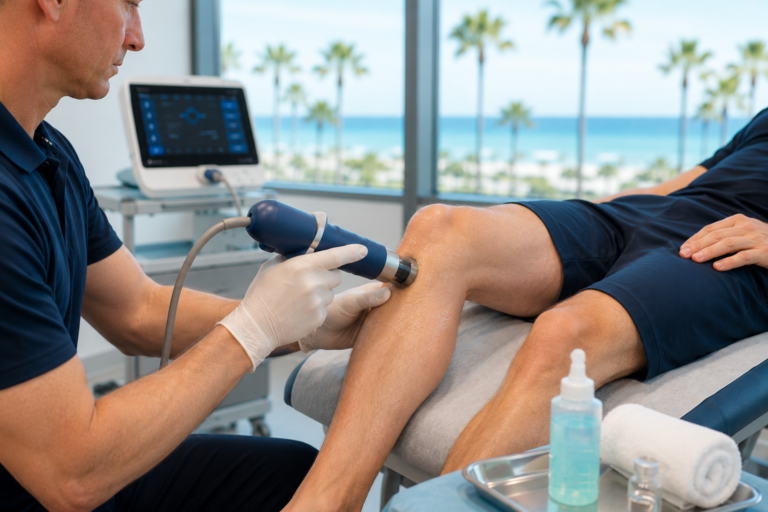
Shockwave therapy — clinically known as extracorporeal shockwave therapy (ESWT) — delivers short, controlled pulses of acoustic energy to a targeted area of tissue. These pressure waves are generated by a handheld applicator and passed through the skin to reach the affected tendon or soft tissue. The treatment is non-invasive, meaning there are no needles, incisions, or anesthesia involved. For a deeper look at the science, our guide on how shockwave therapy works breaks it down step by step.
The underlying idea is to encourage the body’s own repair processes. The mechanical energy is thought to stimulate local circulation and prompt a healing response in tissue that has become “stuck” in a chronic, under-healed state. Because chronic tendon problems often involve poor blood supply and incomplete repair, the goal is to nudge that tissue back toward an active healing process.
Before treatment, your clinician reviews your history and symptoms, examines the area, and confirms whether shockwave therapy is appropriate for you. This step matters — it helps rule out conditions that may need different care and ensures the treatment is targeted to the right spot.
During treatment, a gel is applied to the skin to help transmit the waves, and the applicator is moved over the treatment area. Sessions are typically brief, often lasting only several minutes for the active portion. Some patients feel a tapping or mild discomfort during the pulses, and the intensity can usually be adjusted for comfort. Many patients want to know what to expect here — our page on whether shockwave therapy hurts covers the sensation in more detail.
After treatment, most patients return to their usual day. Mild soreness, redness, or temporary tenderness in the treated area can occur and usually settles on its own. Your clinician will share specific aftercare guidance, which may include modifying high-impact activity for a short period.
Treatment Outcomes and What Patients Can Expect
It’s important to set realistic expectations. Shockwave therapy is not an instant fix, and outcomes vary based on the condition, how long it has been present, your overall health, and how closely you follow your care plan. We avoid promising specific results because no responsible clinic can guarantee them.
That said, here is what patients commonly experience and ask about:
- A series of sessions, not a single visit. Shockwave therapy is typically delivered as a course of treatments spaced over several weeks, rather than a one-time procedure. The exact number depends on your evaluation. If you’re curious about typical session counts, our resource on how many shockwave sessions you may need provides general guidance.
- Gradual changes over time. Because the treatment works by supporting a healing response, improvements — when they occur — often develop progressively rather than overnight. Some patients notice changes during the treatment course, while others see more after it concludes.
- Variable results. Some people respond well, some respond modestly, and some may need to explore other options. Factors like activity level, tissue condition, and adherence to aftercare all play a role.
- A complement to other care. Shockwave therapy is often used alongside rehabilitation, stretching, or strengthening work. To understand how it compares with rehab-based care, see shockwave therapy vs. physical therapy.
Your clinician will track your progress and adjust the plan as needed. If shockwave therapy isn’t producing the response you hoped for, that’s valuable information too — and it helps guide the next step in your care.
Our Patient Care Process
We keep the experience clear and patient-centered from your first contact through follow-up. Here’s how care typically unfolds at our Carlsbad clinic:
- Initial consultation. We listen to your concerns, your goals, and how knee pain is affecting your daily life.
- Medical history and symptom review. We discuss how long you’ve had symptoms, what makes them better or worse, and any prior treatments you’ve tried.
- Physical exam or diagnostic review. We assess the affected area and review any relevant imaging or records you bring to help pinpoint the source of pain.
- Personalized treatment planning. Based on your evaluation, we explain whether shockwave therapy is appropriate and outline a recommended approach, including realistic expectations.
- Treatment sessions. We perform shockwave therapy in-office, adjusting intensity for comfort and tailoring the protocol to your needs.
- Follow-up care. We provide aftercare guidance and check in on how you’re responding.
- Progress tracking. We monitor changes over your treatment course and adjust the plan as needed to support the best possible outcome for your situation.
This structured, transparent process is designed so you always understand what’s happening and why. To learn more about preparing for care, our shockwave therapy recovery basics page is a useful companion read.
Why Choose San Diego Shockwave Therapy Center
Patients across Carlsbad and the greater San Diego area choose us because shockwave therapy is our focus, not an afterthought. Here’s what we aim to offer every patient:
- A dedicated, non-surgical focus. Our practice centers on shockwave therapy for chronic soft-tissue and tendon pain, so this treatment is something we deliver day in and day out.
- Patient-centered, conservative care. We believe in starting with clear education and a thoughtful plan, and we’re upfront when shockwave therapy may or may not be the right fit.
- Local, convenient access. Our Carlsbad location at 2623 Gateway Rd #104 makes it easy for patients across North County San Diego to receive care close to home or work.
- Transparent communication. We explain your options, what each session involves, and what costs to expect — no surprises.
- Personalized treatment planning. Your plan is built around your condition, your history, and your goals rather than a generic template.
We don’t make claims about being “the best” or “number one.” Instead, we let our focus, transparency, and patient-first approach speak for themselves. If reading about other people’s experiences helps you decide, you can browse our shockwave therapy reviews, and if you’re comparing local providers, our guide to choosing a shockwave therapy clinic lays out what to look for.
Serving Carlsbad and the San Diego Area
Carlsbad is an active community — from coastal trails and golf courses to a strong culture of running, cycling, surfing, and recreational sports. With that activity comes a higher likelihood of overuse injuries and stubborn tendon pain, particularly in the knees, feet, and lower limbs. Many of our patients are weekend athletes, working professionals on their feet all day, or active adults who simply don’t want knee pain to slow them down.
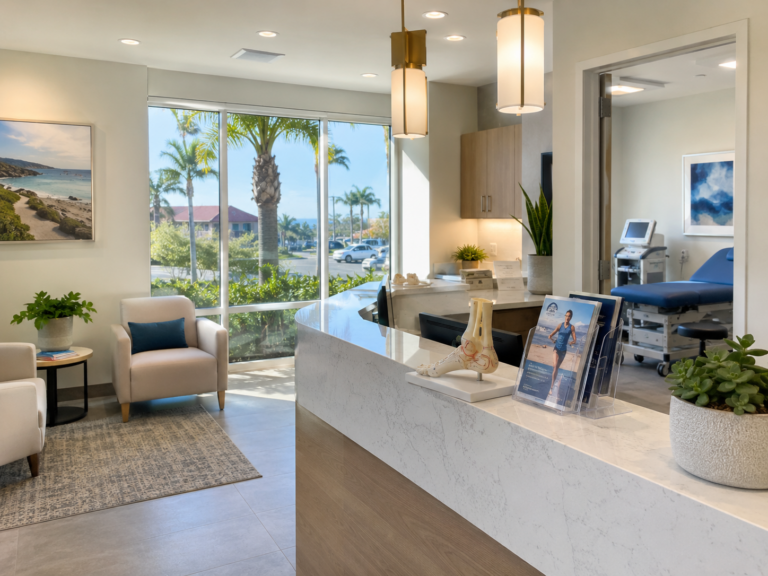
Our clinic sits in the Gateway Rd area of Carlsbad (92009), making us convenient for patients throughout North County San Diego, including nearby San Diego neighborhoods and surrounding communities. Whether you’re dealing with knee pain from a recent training push, a long-standing tendon issue, or the cumulative wear of an active lifestyle, local access to focused, non-surgical care can make a real difference in sticking with your treatment plan.
For Carlsbad and San Diego patients weighing their choices, we’re happy to walk through how shockwave therapy compares to other approaches — including shockwave therapy vs. cortisone injections and shockwave therapy vs. surgery — so you can decide what fits your goals.
Cost, Insurance, and Payment Expectations
We believe in transparent pricing. Shockwave therapy costs vary based on the condition being treated and the number of sessions required. Individual sessions typically range from $75+, with package deals offering significant savings for patients who need a full treatment course.
When compared to the long-term costs of medications, repeated injections, or surgery — including recovery time and lost activity — many patients find shockwave therapy to be a cost-effective option. Of course, the right comparison depends on your specific situation.
Your final cost depends on several factors, including:
- The condition being treated and its severity
- Findings from your consultation and evaluation
- Any diagnostic needs
- The number of treatment sessions recommended
- The type of treatment protocol
- Insurance coverage (shockwave therapy is often self-pay, as coverage varies by plan and condition)
- Any follow-up care
Because of these variables, we provide a detailed, personalized cost estimate during your consultation — so you’ll know what to expect before committing. If budget is a key concern, our page on affordable shockwave therapy options and our shockwave therapy cost guide offer additional context.
Medical References
The information on this page is intended for general education and is not a substitute for professional medical advice. Diagnosis and treatment recommendations always depend on an individual evaluation by a qualified clinician.
- Physiopedia. Extracorporeal Shockwave Therapy.
Ready to Take the Next Step on Your Knee Pain?
You don’t have to keep working around chronic knee pain. If you’re in Carlsbad or the greater San Diego area and want to explore a non-surgical option, shockwave therapy for chronic knee pain may be worth a conversation. The best way to find out whether it’s right for you is a personal evaluation — where we listen to your concerns, assess your knee, and explain your options clearly.
Call San Diego Shockwave Therapy Center today at +1 (760) 477-4760 to schedule your consultation. Take the first step toward relief, better mobility, and getting back to the activities you love. We’re here to help you understand your options and build a plan tailored to you.
Frequently Asked Questions
1. What is shockwave therapy for chronic knee pain?
1. What is shockwave therapy for chronic knee pain?
Shockwave therapy for chronic knee pain is a non-surgical treatment that uses targeted acoustic pressure waves to stimulate the body’s natural healing response in irritated tendons and soft tissue around the knee. It’s often considered for stubborn, chronic tendon problems like patellar tendinopathy. The treatment is non-invasive, requires no needles or incisions, and is performed in-office. Whether it’s right for you depends on an individual evaluation by a qualified clinician.
2. Is shockwave therapy for chronic knee pain available in Carlsbad?
2. Is shockwave therapy for chronic knee pain available in Carlsbad?
Yes. San Diego Shockwave Therapy Center offers shockwave therapy for chronic knee pain at our Carlsbad clinic, located at 2623 Gateway Rd #104, Carlsbad, CA 92009. We serve patients throughout Carlsbad, North County, and the greater San Diego area. To find out whether the treatment may be appropriate for your situation, you can call us at +1 (760) 477-4760 to schedule a consultation.
3. Does shockwave therapy hurt?
3. Does shockwave therapy hurt?
Most patients feel a tapping sensation or mild discomfort during treatment, and the intensity can usually be adjusted for comfort. Some experience temporary soreness, redness, or tenderness in the treated area afterward, which typically settles on its own. Pain tolerance varies from person to person. Your clinician will work with you to keep the experience as comfortable as possible while still delivering effective treatment.
4. How many sessions of shockwave therapy will I need?
4. How many sessions of shockwave therapy will I need?
Shockwave therapy is usually delivered as a series of sessions spaced over several weeks rather than a single visit. The exact number depends on your condition, how long you’ve had symptoms, and how you respond. During your consultation, we’ll recommend a treatment course tailored to your situation. Results vary, and your plan may be adjusted as we track your progress.
5. How much does shockwave therapy cost in Carlsbad?
5. How much does shockwave therapy cost in Carlsbad?
Individual sessions typically start at $75+, with package deals offering savings for a full treatment course. Your total cost depends on your condition, the number of sessions needed, and your specific treatment plan. Because shockwave therapy is often self-pay, we provide a detailed, transparent cost estimate during your consultation so you know what to expect before starting care.
6. Is shockwave therapy covered by insurance?
6. Is shockwave therapy covered by insurance?
Insurance coverage for shockwave therapy varies by plan and by condition, and it is frequently considered a self-pay service. We recommend checking with your insurance provider about your specific coverage. During your consultation, we’ll discuss pricing transparently and help you understand your payment options so there are no surprises.
7. Who is a good candidate for shockwave therapy?
7. Who is a good candidate for shockwave therapy?
Shockwave therapy is most often considered for patients with chronic, soft-tissue or tendon-related pain that hasn’t responded to rest or basic home care. Candidacy depends on your specific condition, medical history, and an in-person evaluation. Some conditions and health situations may make the treatment less appropriate, which is why an individual assessment is essential before beginning care.
8. How is shockwave therapy different from cortisone injections or surgery?
8. How is shockwave therapy different from cortisone injections or surgery?
Shockwave therapy is non-invasive and aims to support the body’s own healing response, without needles or incisions. Cortisone injections deliver medication directly into tissue, while surgery is a more invasive option typically reserved for cases that don’t respond to conservative care. Each approach has different considerations, and the right choice depends on your diagnosis and goals. We’re happy to discuss the comparisons during your visit.
9. How soon will I see results from shockwave therapy?
9. How soon will I see results from shockwave therapy?
Because shockwave therapy works by supporting a gradual healing process, improvements — when they occur — often develop progressively over the treatment course and sometimes afterward, rather than immediately. Timelines vary based on your condition, its severity, and how closely you follow aftercare guidance. We avoid guaranteeing specific outcomes and instead track your progress to adjust your plan as needed.
10. Can I return to normal activities after a session?
10. Can I return to normal activities after a session?
Most patients return to their usual day after a session. You may be advised to modify high-impact activity for a short period, and mild soreness can occur temporarily. Your clinician will provide specific aftercare instructions based on your condition. Following that guidance helps support your recovery between sessions.
11. Is shockwave therapy safe?
11. Is shockwave therapy safe?
Shockwave therapy is generally considered a low-risk, non-invasive treatment when performed by a trained clinician on appropriate candidates. The most common effects are temporary, such as mild soreness or redness. As with any treatment, there are situations where it may not be recommended, which is why a proper evaluation matters. We’ll review your history to ensure the treatment is suitable for you.
12. What knee conditions can shockwave therapy help with?
12. What knee conditions can shockwave therapy help with?
Around the knee, shockwave therapy is frequently considered for chronic tendon problems such as patellar tendinopathy (“jumper’s knee”) and persistent overuse-related pain. It’s also used for related conditions like plantar fasciitis, Achilles tendon pain, and other tendinopathies. It is generally aimed at chronic soft-tissue issues rather than acute injuries. An evaluation determines whether your specific condition may be appropriate.
13. Do I need a referral to start shockwave therapy?
13. Do I need a referral to start shockwave therapy?
In most cases, you can schedule a consultation directly with our Carlsbad clinic without a referral. During that visit, we’ll review your history and symptoms to determine whether shockwave therapy is appropriate for you. If we feel a different type of care would serve you better, we’ll let you know. The simplest first step is to call us and book an evaluation.
14. Where is San Diego Shockwave Therapy Center located?
14. Where is San Diego Shockwave Therapy Center located?
We’re located at 2623 Gateway Rd #104, Carlsbad, CA 92009, serving patients throughout Carlsbad, North County, and the greater San Diego area. Our hours are Monday through Friday from 10 a.m. to 6 p.m. and Saturday from 10 a.m. to 4 p.m. You can reach us at +1 (760) 477-4760 to ask questions or schedule your consultation.