
Shockwave Therapy for Tennis Elbow in Carlsbad, CA
Shockwave therapy for tennis elbow is a non-surgical, non-injection treatment that uses focused acoustic pressure waves to stimulate the body’s natural healing response in the irritated tendons on the outside of the elbow. For Carlsbad patients dealing with stubborn elbow pain that hasn’t improved with rest, bracing, or basic stretching, shockwave therapy may offer a way to support pain relief, restore grip strength, and return to daily activities — without the downtime of surgery. Results vary from person to person, and a proper evaluation is always the first step.
Why Tennis Elbow Care Matters in Carlsbad
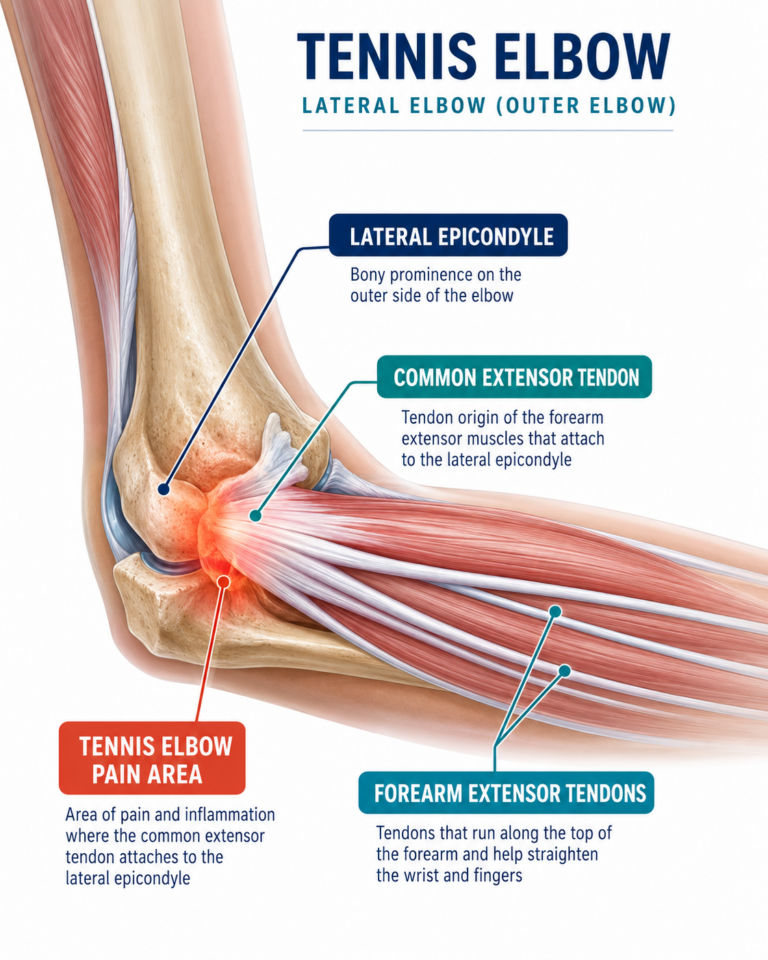
Tennis elbow is one of the most common overuse injuries of the upper limb, and you don’t have to play tennis to develop it. It affects the tendons that attach your forearm muscles to the bony bump on the outside of your elbow (the lateral epicondyle). Repetitive gripping, lifting, twisting, and wrist motion can gradually irritate these tendons, leading to pain, weakness, and frustration that lingers for months.
In an active community like Carlsbad — where many residents golf, surf, play pickleball and tennis, lift weights, garden, or work long hours at a keyboard or job site — this kind of repetitive strain is common. The pain often starts as a dull ache and progresses to a sharper, more limiting discomfort. Left unaddressed, tennis elbow can interfere with simple tasks: shaking hands, lifting a coffee mug, turning a doorknob, carrying groceries, or typing through a workday.
Getting properly evaluated matters because not all elbow pain is the same. What feels like tennis elbow can sometimes involve other structures, nerves, or referred pain from the neck. A focused assessment helps confirm what’s actually going on and guides the most appropriate plan. The goal isn’t to alarm you — it’s to give you clear answers and realistic options so you can make an informed decision about your care. If you’re early in your research, our overview of what shockwave therapy is is a helpful starting point.
Conditions and Symptoms Shockwave Therapy for Tennis Elbow May Help
Patients often seek care when tennis elbow symptoms start to disrupt work, sport, or sleep. Shockwave therapy is most often considered for chronic cases — pain that has persisted for several weeks or months and hasn’t responded well to conservative measures. The table below outlines common symptoms patients notice and how shockwave therapy may support recovery. Every case is different, and outcomes depend on an individual evaluation.
| Symptom or Concern | What Patients Often Notice | How Shockwave Therapy May Help |
|---|---|---|
| Outer elbow pain | A dull ache or sharp pain over the bony bump on the outside of the elbow | Acoustic waves target the irritated tendon to support a localized healing response |
| Weakened grip | Difficulty holding a mug, tool, racket, or phone | Reducing tendon pain may help patients gradually rebuild grip tolerance |
| Pain with gripping or lifting | Discomfort when carrying groceries, lifting weights, or shaking hands | Treatment focuses on the overloaded tendon attachment to ease pain with use |
| Forearm tenderness | Soreness radiating from the elbow down into the forearm | Improved local circulation may support tissue recovery over time |
| Pain with wrist or hand motion | Twisting a doorknob, using a screwdriver, or extending the wrist hurts | Addressing the source tendon may reduce flare-ups during these motions |
| Chronic, lingering cases | Symptoms lasting months despite rest, bracing, or stretching | A non-surgical option to consider when conservative care has stalled |
Beyond tennis elbow, many patients come to us with related soft-tissue and tendon conditions such as plantar fasciitis, Achilles tendon pain, jumper’s knee, hip pain, shoulder tendinopathy, and other sports-related overuse injuries who want a non-surgical option to support pain relief, mobility, and functional recovery. What these conditions tend to share is a common thread: chronic tendon or soft-tissue irritation where the body’s natural repair process has stalled, leaving pain and weakness that linger despite rest and conservative care. Because shockwave therapy is designed to stimulate that healing response in a targeted way, the same underlying approach used for tennis elbow can apply across many of these areas — whether it’s the heel and arch in shockwave therapy for plantar fasciitis or the joint and surrounding tendons in shockwave therapy for knee pain.
Tennis elbow simply happens to be one of the conditions where focused shockwave therapy is most frequently discussed, in part because lateral epicondylitis is so common among both active people and those with repetitive-strain jobs. If your elbow pain is part of a broader pattern of overuse — or if you’re managing more than one nagging tendon issue at once — we’re happy to evaluate your full picture and talk through whether shockwave therapy fits your situation. Every recommendation starts with an individual assessment rather than assumptions.
How Shockwave Therapy for Tennis Elbow Works
Extracorporeal shockwave therapy delivers high-energy acoustic pressure waves to the affected tendon through the surface of the skin. “Extracorporeal” simply means the energy is generated outside the body and directed inward to the treatment area — no needles, incisions, or anesthesia are involved.
The pressure waves are thought to work in a few ways: by stimulating local blood flow to the treatment area, encouraging the body’s natural tissue-repair processes, and helping modulate how the area transmits pain. For chronic tendon problems like tennis elbow — where the body’s normal healing may have stalled — this stimulation is intended to “restart” or support the repair response. You can read more about how shockwave therapy works in our detailed guide.
Before your session, a provider examines your elbow, reviews your history, and identifies the precise area of tenderness. A gel is applied to the skin to help transmit the waves efficiently.
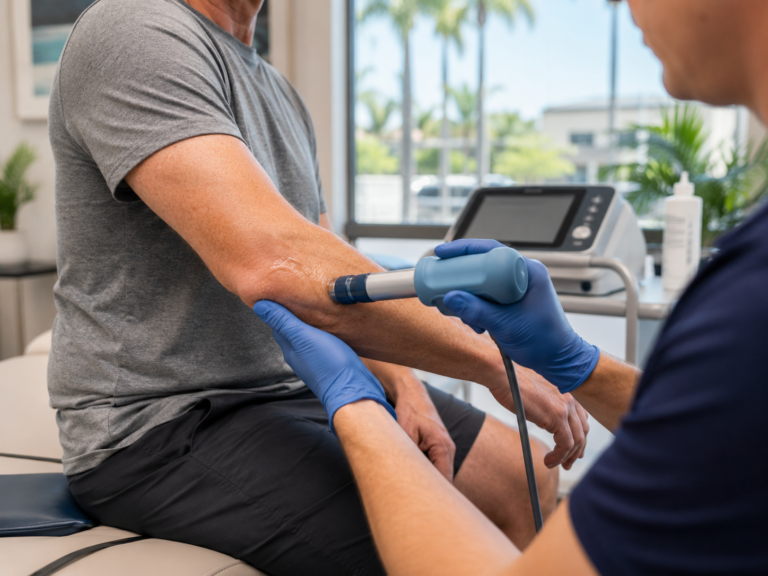
During your session, a handheld applicator is placed against the outer elbow and delivers a series of pulses to the target tendon. Most sessions are brief, often lasting only several minutes for the treatment area itself. Many patients describe the sensation as a tapping or mild thumping that can feel tender over sensitive spots, but intensity can usually be adjusted for comfort. If you’re wondering whether shockwave therapy hurts, our dedicated page walks through what the experience typically feels like.
After your session, most patients can return to their day right away. Some mild soreness or temporary tenderness in the treated area is common in the hours afterward, similar to how a muscle might feel after a workout. We’ll provide guidance on activity, and you may be given gentle exercises to support recovery between visits.
Treatment Outcomes and What Patients Can Expect
It’s important to set realistic expectations. Shockwave therapy is not an instant fix, and results vary depending on how long you’ve had symptoms, the severity of the tendon changes, your overall health, and how closely you follow your provider’s guidance.

Most treatment plans for tennis elbow involve a series of sessions — commonly several visits spaced about a week apart — rather than a single appointment. This is because the therapy is designed to stimulate a gradual healing process over time. Many patients begin to notice changes over the course of their plan and in the weeks that follow, as the tissue continues to respond. To understand typical planning, see our guide on how many shockwave sessions patients may need.
Possible outcomes patients often hope for include reduced pain with daily activities, improved grip tolerance, and a gradual return to work, sport, or hobbies. We cannot guarantee specific results, a cure, or permanent relief — no responsible clinic can. What we can do is provide an honest assessment of whether you may be a good candidate and outline a plan tailored to your situation. For a clearer picture of the recovery timeline, our shockwave therapy recovery basics resource is a useful read.
Our Patient Care Process
We keep our process structured, transparent, and centered on you. Here’s what working with our Carlsbad team typically looks like:
- Initial consultation. We listen to your concerns, your goals, and how the pain is affecting your daily life.
- Medical history and symptom review. We discuss when symptoms started, what aggravates them, prior treatments you’ve tried, and your overall health.
- Physical exam or diagnostic review. A focused exam helps confirm the source of your pain and rule out other contributors before recommending care.
- Personalized treatment planning. If shockwave therapy is appropriate, we explain the recommended number of sessions, spacing, and what to expect — and we welcome your questions.
- Treatment sessions. Each visit delivers targeted shockwave therapy to the affected tendon, with intensity adjusted for your comfort.
- Follow-up care. Between and after sessions, we may suggest activity modifications or gentle exercises to support your progress.
- Progress tracking. We monitor how you respond and adjust the plan as needed so your care stays aligned with your goals.
This step-by-step approach helps ensure that treatment decisions are based on your individual evaluation rather than a one-size-fits-all template. If you’re weighing options, comparisons like shockwave therapy versus physical therapy, shockwave therapy versus cortisone injections, and shockwave therapy compared with surgery can help you understand where this treatment fits among the alternatives.
Why Choose San Diego Shockwave Therapy Center
San Diego Shockwave Therapy Center is dedicated specifically to extracorporeal shockwave therapy for chronic soft-tissue and tendon pain — it’s our focus, not an afterthought. For Carlsbad patients, that means working with a team that understands the nuances of conditions like tennis elbow and tailors each plan to the individual in front of them.
What patients value about our approach:
- A focused, non-surgical option for those who want to explore alternatives before considering injections or surgery.
- Patient-centered, compassionate communication — we explain things in plain language and make sure you understand your plan.
- Personalized care built around your evaluation, history, and goals, rather than a generic protocol.
- Local accessibility with a convenient Carlsbad location for residents across North County and greater San Diego.
- Transparent expectations, including honest conversations about candidacy, pricing, and what shockwave therapy can and cannot do.
We encourage prospective patients to do their homework. Reading through our benefits of shockwave therapy overview and our shockwave therapy safety guide can help you make a confident, informed decision.
Serving Carlsbad and Nearby San Diego Communities
Our clinic is located at 2623 Gateway Rd #104, Carlsbad, CA 92009, making us easily accessible to patients throughout Carlsbad and the surrounding San Diego area. Carlsbad’s active, outdoor-oriented lifestyle — from beach activities and golf to pickleball, tennis, and weekend gym sessions — means repetitive-strain injuries like tennis elbow are something we see often.
We also serve patients commuting from across the greater San Diego region who are looking for a dedicated shockwave therapy provider. Whether your elbow pain stems from a desk job, a trade that demands repetitive gripping, a sport you love, or simply the wear and tear of daily life, our Carlsbad team is here to help you understand your options close to home. If you’re trying to decide on timing, our guide on when to start shockwave therapy addresses a question many local patients ask.
Cost, Insurance, and Payment Expectations
We believe in transparent, upfront pricing. Shockwave therapy costs vary based on the condition being treated and the number of sessions required. Individual sessions typically range from $75+, with package deals offering significant savings for patients who need a full series of treatments.
When compared to the long-term costs of medications, repeated injections, or surgery — including recovery time and time away from work — many patients find shockwave therapy to be a cost-effective option to consider. That said, the right plan and total cost depend on several factors, including:
- The specifics of your condition and how long you’ve had symptoms
- Findings from your consultation and physical exam
- Any diagnostic needs identified during evaluation
- The number of treatment sessions recommended
- Whether follow-up care is part of your plan
- Whether you’re paying out of pocket or pursuing any applicable coverage
We offer transparent pricing and will provide a detailed cost estimate during your consultation, so you’ll know what to expect before committing to a plan. For more on this topic, see our shockwave therapy cost page. Because insurance coverage for shockwave therapy varies, we recommend confirming any benefits directly with your provider; our team can help you understand your self-pay options either way.
Medical References
For patients who want to dig deeper into the science of extracorporeal shockwave therapy, the following educational resource provides a clinically grounded overview:
- Physiopedia — Extracorporeal Shockwave Therapy
This page is for general educational purposes and does not replace a professional medical evaluation. Diagnosis and treatment recommendations always depend on an individual assessment by a qualified provider.
Frequently Asked Questions
1. What is shockwave therapy for tennis elbow?
1. What is shockwave therapy for tennis elbow?
Shockwave therapy for tennis elbow is a non-surgical treatment that uses focused acoustic pressure waves to stimulate the body’s natural healing response in the irritated tendons on the outside of the elbow. It involves no needles, incisions, or anesthesia. The goal is to support pain relief and recovery in chronic cases of lateral epicondylitis, particularly when rest, bracing, and stretching haven’t produced enough improvement. Whether it’s right for you depends on an individual evaluation.
2. Does shockwave therapy for tennis elbow hurt?
2. Does shockwave therapy for tennis elbow hurt?
Many patients describe the sensation as a tapping or thumping that can feel tender over sensitive spots, but the intensity can usually be adjusted for comfort during the session. Some mild, temporary soreness in the treated area afterward is common, similar to how muscles feel after exercise. Comfort levels vary from person to person. Our team checks in throughout your session and adjusts settings as needed so the experience stays tolerable.
3. How many sessions will I need for tennis elbow?
3. How many sessions will I need for tennis elbow?
Most tennis elbow plans involve a series of sessions — commonly several visits spaced about a week apart — rather than a single appointment, because the therapy is designed to stimulate gradual healing over time. The exact number depends on the severity and duration of your symptoms and how you respond. We’ll outline a recommended plan after your evaluation and adjust it based on your progress.
4. How much does shockwave therapy for tennis elbow cost in Carlsbad?
4. How much does shockwave therapy for tennis elbow cost in Carlsbad?
Individual sessions typically start at $75+, with package deals offering significant savings for a full series of treatments. The total cost depends on your condition, the number of sessions recommended, and any follow-up care. We provide a detailed, personalized cost estimate during your consultation so there are no surprises. Many patients find it cost-effective compared with the long-term expense of medications, repeated injections, or surgery.
5. Is shockwave therapy safe?
5. Is shockwave therapy safe?
Extracorporeal shockwave therapy is widely used as a non-invasive option for chronic tendon and soft-tissue conditions. As with any treatment, it isn’t appropriate for everyone, and certain health conditions may make it unsuitable. That’s why a thorough evaluation comes first — to confirm you’re a good candidate and to discuss any considerations specific to your situation. Our team will review your history and answer your safety questions before beginning care.
6. How soon will I see results?
6. How soon will I see results?
Results vary. Shockwave therapy works gradually by stimulating a healing response, so it isn’t an instant fix. Many patients begin to notice changes over the course of their treatment plan and in the weeks that follow, as the tissue continues to respond. Factors like how long you’ve had symptoms and how closely you follow your provider’s guidance can influence your timeline. We cannot guarantee specific outcomes.
7. Who is a good candidate for shockwave therapy for tennis elbow?
7. Who is a good candidate for shockwave therapy for tennis elbow?
Shockwave therapy is most often considered for chronic tennis elbow — pain that has persisted for weeks or months and hasn’t responded well to conservative care like rest, bracing, or stretching. Good candidates are typically patients looking for a non-surgical, non-injection option. Candidacy depends on your overall health and a focused evaluation, which helps confirm the source of your pain and whether this treatment is appropriate for you.
8. Do I need a referral to get shockwave therapy in Carlsbad?
8. Do I need a referral to get shockwave therapy in Carlsbad?
Many patients contact us directly to schedule a consultation without a referral. During that first visit, we review your history, examine your elbow, and confirm whether shockwave therapy is appropriate for your situation. If we believe another approach would serve you better, we’ll tell you honestly. The simplest first step is to call our Carlsbad clinic and schedule an evaluation.
9. How is shockwave therapy different from cortisone injections or surgery?
9. How is shockwave therapy different from cortisone injections or surgery?
Shockwave therapy is non-surgical and needle-free, aiming to stimulate the body’s own healing rather than masking pain or operating on the tendon. Cortisone injections and surgery are different approaches with their own benefits, risks, and recovery considerations. The best choice depends on your individual case. Our comparison pages on shockwave therapy versus cortisone injections and versus surgery can help you weigh the options.
10. Can I return to work or sports after a session?
10. Can I return to work or sports after a session?
Most patients can return to their normal day right away after a session, though some mild soreness in the treated area is common for a short time. We may recommend temporary activity modifications or gentle exercises to support your recovery between visits. Your provider will give you specific guidance based on your condition, your goals, and how your elbow is responding to treatment.
11. Is shockwave therapy only for athletes?
11. Is shockwave therapy only for athletes?
No. While athletes commonly develop tennis elbow, so do people whose work or hobbies involve repetitive gripping, lifting, or wrist motion — from tradespeople and desk workers to gardeners and parents carrying children. Tennis elbow is an overuse condition, not a sport-specific one. Shockwave therapy may be considered for anyone with chronic lateral epicondylitis, pending an individual evaluation.
12. What happens if shockwave therapy doesn’t help my tennis elbow?
12. What happens if shockwave therapy doesn’t help my tennis elbow?
Not every patient responds the same way, and we’re honest about that from the start. If your symptoms don’t improve as hoped, we’ll reassess your plan, consider other contributing factors, and discuss alternative options or referrals where appropriate. Our priority is helping you find a path forward, even if that means exploring approaches beyond shockwave therapy.
13. Where is your shockwave therapy clinic located?
13. Where is your shockwave therapy clinic located?
We’re located at 2623 Gateway Rd #104, Carlsbad, CA 92009, serving patients throughout Carlsbad and the greater San Diego area. Our hours are Monday through Friday from 10:00 AM to 6:00 PM and Saturday from 10:00 AM to 4:00 PM. You can call us at (760) 477-4760 to ask questions or schedule a consultation for your tennis elbow.