
Shockwave Therapy for Achilles Tendinopathy in Carlsbad, CA
If lingering pain at the back of your heel or along your Achilles tendon is keeping you from running, hiking, or simply walking comfortably, you are not alone — and you have non-surgical options worth understanding. Shockwave therapy for Achilles tendinopathy is a non-invasive treatment that uses focused acoustic pressure waves to stimulate the body’s natural healing response in chronically irritated tendon tissue. At San Diego Shockwave Therapy Center in Carlsbad, we focus on helping patients explore conservative, evidence-informed care before considering more invasive procedures.
Achilles tendinopathy is one of the most common overuse injuries affecting active adults, weekend athletes, and people whose daily routines keep them on their feet. Because the Achilles is the largest and strongest tendon in the body, pain in this area can quickly limit mobility and quality of life. The good news is that many patients dealing with stubborn, slow-to-heal tendon pain are good candidates for a structured, non-surgical approach.
Why Care for Achilles Tendinopathy Matters
The Achilles tendon connects your calf muscles to your heel bone and absorbs significant force every time you push off, jump, or climb. When that tendon is repeatedly overloaded, the tissue can begin to degenerate rather than heal cleanly — a condition more accurately described as tendinopathy than simple “tendinitis.” Over time, this can lead to thickening of the tendon, morning stiffness, and persistent discomfort that does not fully resolve with rest alone.
Many people try to push through Achilles pain, hoping it will fade on its own. While early irritation sometimes settles with rest and activity modification, chronic tendinopathy often lingers for months because tendons have a limited blood supply and heal slowly. Left unaddressed, ongoing pain can change the way you walk, place added strain on your knees, hips, and lower back, and gradually reduce your activity level.
Getting properly evaluated matters because Achilles pain can have several underlying causes, and the right plan depends on an accurate diagnosis. A thoughtful assessment helps clarify whether your symptoms stem from mid-portion tendinopathy, insertional tendinopathy at the heel, or another issue altogether — and that distinction shapes which conservative treatments are most appropriate. Seeking care early may help you return to the activities you enjoy more comfortably, though every patient’s situation and timeline are different.
Conditions, Symptoms, and Problems This Service May Help
Shockwave therapy is most often used for chronic soft-tissue and tendon conditions that have not responded well to initial rest, stretching, or activity changes. Patients frequently seek care when pain has persisted for several weeks or months. While our focus on this page is the Achilles tendon, the same approach is used across a range of overuse injuries.
| Condition / Symptom | What Patients Often Describe | How Shockwave Therapy May Help |
|---|---|---|
| Mid-portion Achilles tendinopathy | Aching or stiffness a few centimeters above the heel, worse in the morning | May support the healing response in chronically irritated tendon tissue |
| Insertional Achilles tendinopathy | Pain right where the tendon meets the heel bone | Can be part of a broader conservative care plan |
| Plantar fasciitis | Sharp heel pain with first steps in the morning | A common, well-studied use of shockwave therapy |
| Tennis elbow / jumper’s knee | Localized tendon pain with gripping or jumping | May help chronic tendinopathy that resists rest |
| Shoulder or hip tendinopathy | Persistent ache with overhead or weight-bearing movement | Used for stubborn soft-tissue overuse injuries |
| Sports-related overuse injuries | Recurring pain that limits training or competition | Non-surgical option to support pain relief and function |

Common symptoms that lead patients to ask about shockwave therapy for Achilles tendinopathy include chronic soft-tissue pain, Achilles tendon pain, morning stiffness, a thickened or tender spot along the tendon, and discomfort that flares with activity. If you are weighing your options, it can help to understand how shockwave therapy works before your visit so you can make an informed decision.
It is important to note that not everyone is a candidate. Shockwave therapy is generally avoided during pregnancy, over open wounds, near certain implanted devices, and in people with specific blood-clotting conditions, among other contraindications. This is exactly why an individual evaluation comes first.
How Shockwave Therapy Works
Shockwave therapy — known clinically as extracorporeal shockwave therapy (ESWT) — delivers controlled acoustic pressure waves to the affected area through the surface of the skin. “Extracorporeal” simply means the energy is generated outside the body and directed into the tissue, so no incisions or injections are involved.
The proposed goal of treatment is to stimulate the body’s own repair processes in tissue that has become slow to heal. Based on available research, the mechanisms thought to be involved include encouraging new blood vessel formation (neovascularization) near the tendon, stimulating the cells responsible for tendon repair, and prompting collagen production and tissue remodeling. It is worth being candid here: the precise way ESWT produces its effects is still being studied, and results vary from person to person.
Before treatment, your clinician reviews your history and examines the affected area to locate the most symptomatic region and confirm you are an appropriate candidate.
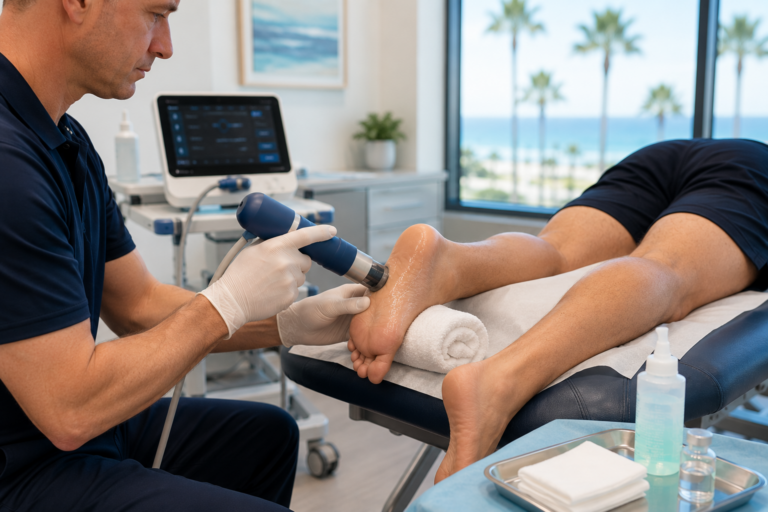
During treatment, a gel is applied to the skin and a handpiece delivers pulses to the targeted tissue. A typical session is short, often around 10 to 20 minutes depending on the area. Most patients remain seated or lying down and can go about their day afterward. Some people feel mild, temporary discomfort during the pulses, and the intensity can usually be adjusted for comfort.
After treatment, you may notice some short-lived soreness or tenderness, which generally settles within a day or two. Your provider may recommend modifying high-impact activity for a brief period and often pairs shockwave therapy with a guided loading or stretching program, since research suggests tendons respond best when treatment is combined with appropriate exercise. To learn what the days after a session can look like, our overview of shockwave therapy recovery basics walks through common expectations.
Treatment Outcomes and What Patients Can Expect
There is no single, universal shockwave protocol, and outcomes depend on factors such as how long symptoms have been present, the severity of the tendinopathy, your overall health, and how consistently you follow your care plan. Because of this, it is important to set realistic expectations rather than expecting an instant fix.

Many patients receive a course of treatments — commonly a handful of sessions spaced roughly a week apart — rather than a single visit. Improvement, when it occurs, often unfolds gradually over several weeks as the tissue responds, and some patients continue to notice changes after the treatment course is complete. Your provider can give you a clearer sense of an appropriate schedule for your situation; you can also read our general guidance on how many shockwave sessions patients may need.
We want to be clear and responsible about this: shockwave therapy is not a guaranteed cure, and it does not work for everyone. Some patients experience meaningful relief and improved function, others see partial improvement, and some may need to explore additional or alternative options. The aim of care is to support pain relief, mobility, and functional recovery — not to promise a specific result. Your provider will track your progress and adjust the plan as needed.
Our Patient Care Process
We believe good outcomes start with a careful, personalized process. Here is how care typically unfolds at our Carlsbad clinic:
- Initial consultation. We listen to your concerns, goals, and how your Achilles pain affects daily life.
- Medical history and symptom review. We discuss how long symptoms have lasted, what aggravates them, prior treatments, and any health conditions that affect candidacy.
- Physical exam or diagnostic review. We assess the tendon and surrounding structures and review any imaging or records you bring.
- Personalized treatment planning. If shockwave therapy is appropriate, we outline a recommended number of sessions, expected timeline, and any complementary exercises.
- Treatment. Sessions are delivered in our office using a comfortable, non-invasive applicator.
- Follow-up care. We check in on your response and adjust intensity, frequency, or supporting exercises as needed.
- Progress tracking. We monitor changes in pain and function over time so your plan stays aligned with your goals.
This structured approach helps ensure that treatment is tailored to you rather than applied as a one-size-fits-all protocol. If you are comparing conservative routes, you may find our look at shockwave therapy vs. physical therapy helpful for understanding how these approaches can complement one another.
Why Choose San Diego Shockwave Therapy Center
Patients in Carlsbad and the surrounding area choose San Diego Shockwave Therapy Center because we focus specifically on non-surgical, shockwave-based care for chronic tendon and soft-tissue conditions. That focus shapes everything from how we evaluate candidacy to how we tailor each treatment plan.
What patients value about our approach includes:
- A conservative-first philosophy. We help patients explore non-invasive options before considering injections or surgery, when that is appropriate for their situation.
- Patient-centered, personalized care. Your plan is built around your symptoms, history, and goals — not a generic template.
- Clear, honest communication. We explain what shockwave therapy can and cannot do, so you can make confident, informed decisions.
- Local accessibility. Our Carlsbad location is convenient for patients across North County San Diego.
- A dedicated treatment focus. Because shockwave therapy is central to our practice, it is what we work with day in and day out.
We encourage you to learn more about what shockwave therapy is and to read shockwave therapy reviews from people who have explored care with us.
Serving Carlsbad and Nearby San Diego Communities
Carlsbad is an active, outdoor-oriented community — from coastal trail runs and beach workouts to cycling along the coast and recreational sports. That kind of lifestyle is wonderful for overall health, but it also means Achilles overuse injuries are common among local residents, whether you are a dedicated runner, a weekend hiker, or someone whose job keeps you on your feet.
Our clinic at 2623 Gateway Rd #104 sits conveniently within Carlsbad and is easily reached by patients throughout North County and the greater San Diego area. We regularly see active adults who want to stay mobile, parents juggling busy schedules, and athletes hoping to return to training without rushing into surgery. Because Achilles tendinopathy can affect anyone who loads the tendon repeatedly, our care is designed to meet a wide range of local needs.
If you live or work in Carlsbad or are traveling in from elsewhere in San Diego County, we aim to make scheduling and follow-up straightforward. You can also explore related local resources such as our guide to plantar fasciitis treatment, since heel and foot conditions often go hand in hand with Achilles issues, and our overview of when to start shockwave therapy if you are trying to decide on timing.
Cost, Insurance, and Payment Expectations
One of the most common questions we hear is about cost — and we believe in being transparent. Shockwave therapy pricing varies based on the condition being treated and the number of sessions required. Individual sessions typically range from $75+, with package deals offering meaningful savings for patients who need a full course of care.
When compared with the long-term costs of medications, repeated injections, or surgery — including recovery time away from work and activity — many patients find shockwave therapy to be a cost-effective option. That said, the right number of sessions and the overall investment depend on your individual situation.
Your final cost may depend on factors such as:
- The specific condition and its severity
- Findings from your consultation and exam
- Any diagnostic review needed
- The number of treatments recommended
- The treatment type and area
- Whether your care is self-pay or potentially covered
- Any follow-up care
We offer transparent pricing and will provide a detailed cost estimate during your consultation, after we understand your needs. If affordability is a concern, our page on cost-conscious shockwave therapy options and our detailed shockwave therapy cost breakdown can help you plan ahead.
Medical References
The information on this page reflects general, evidence-informed understanding of extracorporeal shockwave therapy (ESWT) and is provided for patient education. For a clinical overview of ESWT, its proposed mechanisms of action, indications, and contraindications, see:
- Physiopedia — Extracorporeal Shockwave Therapy.
Treatment recommendations should always be based on an individual medical evaluation. This page is not a substitute for professional diagnosis or care.
Frequently Asked Questions
1. What is shockwave therapy for Achilles tendinopathy?
1. What is shockwave therapy for Achilles tendinopathy?
Shockwave therapy for Achilles tendinopathy is a non-surgical treatment that delivers focused acoustic pressure waves to the affected tendon through the skin. The goal is to stimulate the body’s natural healing response in tissue that has become slow to repair. It is typically used for chronic Achilles pain that has not improved with rest, stretching, or activity changes, and it is often combined with a guided exercise program for better results.
2. Is shockwave therapy painful?
2. Is shockwave therapy painful?
Most patients tolerate shockwave therapy well. You may feel a mild, temporary discomfort during the pulses, and the intensity can usually be adjusted for your comfort. Some people notice short-lived soreness or tenderness afterward that generally settles within a day or two. Sessions are non-invasive, require no incisions or anesthesia, and you can typically resume normal activity the same day. You can read more on our page about whether shockwave therapy hurts.
3. How many sessions will I need?
3. How many sessions will I need?
There is no single universal protocol. Many patients receive a course of several sessions spaced roughly a week apart rather than a single visit. The exact number depends on how long your symptoms have lasted, their severity, and how you respond to treatment. Your provider will recommend an appropriate schedule after evaluating you and will adjust it based on your progress.
4. How soon will I see results?
4. How soon will I see results?
Results vary from person to person. Improvement, when it occurs, often develops gradually over several weeks as the tissue responds, and some patients continue to notice changes after completing their treatment course. Shockwave therapy is not an instant fix, and it does not work for everyone. Your provider can give you a more realistic timeline based on your specific situation.
5. Is shockwave therapy safe?
5. Is shockwave therapy safe?
Shockwave therapy is generally considered a low-risk, non-invasive option for many patients. However, it is not appropriate for everyone. It is typically avoided during pregnancy, over open wounds, near certain implanted devices like pacemakers, over major blood vessels and nerves, and in people with specific blood-clotting conditions, among other contraindications. An individual evaluation helps confirm whether it is safe for you.
6. Who is a good candidate for this treatment?
6. Who is a good candidate for this treatment?
Good candidates are often people with chronic Achilles tendon pain that has persisted for weeks or months and has not fully responded to rest, stretching, or activity modification. Candidacy also depends on your overall health and any conditions that may rule out treatment. The only way to know if you are a candidate is through a proper consultation and exam.
7. How much does shockwave therapy for Achilles tendinopathy cost in Carlsbad?
7. How much does shockwave therapy for Achilles tendinopathy cost in Carlsbad?
Pricing varies based on the condition and the number of sessions needed. Individual sessions typically start at $75+, and package deals offer savings for a full course of care. Many patients find it cost-effective compared with the long-term costs of medications, injections, or surgery. We provide a detailed, personalized estimate during your consultation.
8. Does insurance cover shockwave therapy?
8. Does insurance cover shockwave therapy?
Coverage varies, and shockwave therapy is often a self-pay service. Whether any portion is covered depends on your specific plan and situation. We recommend discussing your circumstances with us during your consultation so we can explain your options and provide transparent pricing before you commit to a plan.
9. Is shockwave therapy better than surgery?
9. Is shockwave therapy better than surgery?
Shockwave therapy and surgery serve different roles. For many patients with chronic tendinopathy, shockwave therapy offers a non-invasive option to try before considering surgery, with no incisions and minimal downtime. Surgery may be appropriate in select cases. The right choice depends on your individual evaluation. Our comparison of shockwave therapy vs. surgery explains the differences in more detail.
10. How is shockwave therapy different from cortisone injections?
10. How is shockwave therapy different from cortisone injections?
Cortisone injections deliver anti-inflammatory medication directly into an area, while shockwave therapy uses acoustic pressure waves to stimulate the body’s own repair processes without medication or needles. Each has different considerations, benefits, and risks. You can explore the distinctions on our page comparing shockwave therapy vs. cortisone injections.
11. Can I exercise after a shockwave therapy session?
11. Can I exercise after a shockwave therapy session?
Your provider may recommend modifying high-impact activity for a short period after treatment, while often encouraging specific loading or stretching exercises as part of your plan. Tendons tend to respond best when shockwave therapy is paired with appropriate exercise. Always follow the personalized guidance your provider gives you, since recommendations depend on your condition and response.
12. What conditions besides Achilles tendinopathy can shockwave therapy treat?
12. What conditions besides Achilles tendinopathy can shockwave therapy treat?
Shockwave therapy is used for a range of chronic soft-tissue and tendon conditions, including plantar fasciitis, tennis elbow, jumper’s knee, hip pain, and shoulder tendinopathy, as well as sports-related overuse injuries. It is most often considered when symptoms have persisted despite initial conservative care. A consultation can determine whether it suits your specific condition.
13. Do I need a referral to book a consultation?
13. Do I need a referral to book a consultation?
You can contact our Carlsbad clinic directly to ask about scheduling a consultation. During that visit, we review your history, examine the affected area, and determine whether shockwave therapy is appropriate for you. If you are unsure whether your symptoms are a fit, reaching out is a good first step.
14. Where is your shockwave therapy clinic located?
14. Where is your shockwave therapy clinic located?
We are located at 2623 Gateway Rd #104, Carlsbad, CA 92009, conveniently serving patients throughout Carlsbad and the greater San Diego area. Our hours are Monday through Friday, 10am to 6pm, and Saturday, 10am to 4pm. You can call us at (760) 477-4760 to ask questions or schedule a consultation.
15. How do I know if shockwave therapy is right for me?
15. How do I know if shockwave therapy is right for me?
The best way to find out is through an individual evaluation. Because Achilles pain can have several causes and shockwave therapy is not suitable for everyone, a consultation lets us review your history, examine the tendon, confirm candidacy, and recommend a plan tailored to your needs. Results vary, and we will give you honest guidance about what to expect.