
Executive Summary
Shockwave therapy in Oceanside is usually uncomfortable but tolerable, most often feeling like rapid tapping pressure with brief sharpness at the exact tender tendon or insertion point. Discomfort is typically highest early in the session and then settles, with mild soreness for 24–72 hours afterward that can be managed with smart activity modifications.
3 Core Insights
- Most of the “hurt” is location-dependent: Superficial, highly sensitized tendon-bone interfaces (heel/plantar fascia insertion, Achilles insertion, lateral epicondyle) tend to feel sharper than thicker muscle areas like the calf or glute region.
- Comfort is controllable in real time: A well-run session uses gel coupling, precise localization, and gradual intensity ramping so discomfort stays localized and adjustable rather than escalating or forcing you to guard.
- After-effects are normal but need load management: Mild soreness, warmth, or occasional bruising for 24–72 hours is common, and avoiding high-impact running or aggressive stretching for 24–48 hours often prevents unnecessary flare-ups.
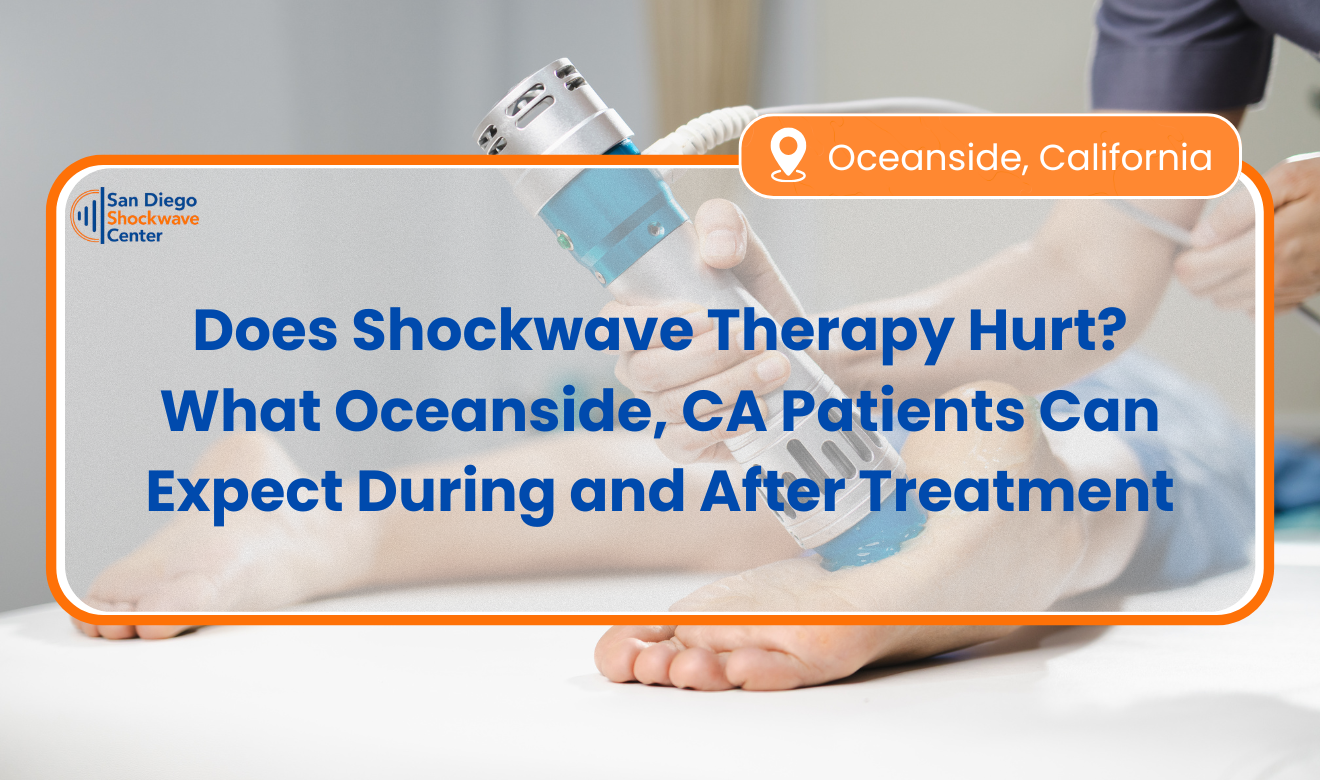
Shockwave therapy usually feels like fast, tapping pressure with brief, tolerable discomfort that changes by body area, injury type, and energy level. For people searching “does shockwave therapy hurt Oceanside,” most sessions in a clinical setting start with a quick exam and palpation to pinpoint the most tender spot, such as the plantar fascia near the heel, the Achilles insertion at the back of the ankle, or the lateral hip over the gluteal tendons. The clinician then applies gel and delivers acoustic pulses through a handheld applicator, often beginning at a lower intensity and ramping up based on real-time feedback. Pain is typically sharper over calcified or highly inflamed tissue, like chronic plantar fasciitis with a tight medial arch or tennis elbow at the lateral epicondyle, and milder in broader muscle bellies like the calf. A common “during treatment” pattern is 2,000–4,000 pulses over 5–10 minutes, with discomfort peaking during the first minute and then settling as the area desensitizes. After treatment, mild soreness, warmth, or bruising can occur for 24–72 hours, similar to a deep tissue workout, and the area may feel “looser” but also sensitive to pressure. Most patients are advised to avoid high-impact running on the Strand or steep hill repeats for a day or two, limit aggressive stretching, and use relative rest plus normal walking unless otherwise directed. Improvement often builds gradually over several visits as local blood flow and tendon remodeling responses accumulate, with progress tracked by pain with first steps in the morning, single-leg heel raises, or grip strength during daily tasks.
What “Hurts” in Shockwave: Sensation vs. Tissue Response
Shockwave discomfort is usually a combination of surface sensitivity and deeper tendon irritation, not “damage” from the device. The intensity you feel is driven by where the applicator is placed, the energy level, and the condition of the tissue being treated.
Extracorporeal shockwave therapy (ESWT) delivers acoustic energy through the skin to stimulate a local biological response; the sensation is often strongest where pain fibers are already sensitized (chronic tendinopathy, enthesopathy at the tendon-bone junction, or calcific deposits). In practical terms, that means the same settings may feel mild in a calf muscle belly and noticeably sharper at a tendon insertion like the heel or lateral elbow.
- Most sensitive targets: tendon insertions (entheses), calcific deposits, very focal trigger points.
- Usually more tolerable targets: larger muscle bellies, broad soft-tissue regions without pinpoint tenderness.
- Common “arc” during a session: sharpest during the first 30–90 seconds, then more tolerable as the area accommodates.
What to Expect in an Oceanside Session (Step-by-Step)
A typical appointment follows a predictable clinical sequence designed to keep discomfort tolerable while targeting the correct tissue. The provider will localize the pain generator, start with a lower dose, and adjust based on your feedback.
In most outpatient settings, the visit begins with symptom history (what triggers pain, morning stiffness, training volume, footwear), then a focused exam. Palpation and functional testing (e.g., single-leg heel raise, resisted wrist extension, hop test) help identify the most irritable structure before the applicator is placed.
- Screening & consent: review health history, medications, and red flags; confirm there are no contraindications.
- Localization: the clinician palpates to find the most tender point(s) and confirms with movement-based tests.
- Positioning: limb is placed to expose the target and reduce guarding (ankle neutral for Achilles, elbow supported for lateral epicondyle).
- Gel application: coupling gel improves energy transmission and reduces surface irritation.
- Dose ramping: intensity typically begins lower and increases in small steps to a tolerable therapeutic level.
- Pulse delivery: many protocols deliver thousands of pulses over several minutes, with brief check-ins on comfort.
- Post-care plan: activity limits, pain expectations, and follow-up schedule are reviewed.
Body Areas That Commonly Feel More Painful (And Why)
Some anatomical regions predictably feel sharper because they have less soft tissue coverage and more sensitized tendon-bone interfaces. The “worst spots” are often the same spots that hurt most during daily activities.
When patients ask whether shockwave therapy hurts in the Oceanside area, the most relevant answer is: it depends heavily on the diagnosis and tissue depth. Regions with thin tissue layers (heel, elbow) transmit sensation differently than thicker, more muscular areas (gluteal region, calf).
- Plantar fascia near the medial heel: focal tenderness at the calcaneal insertion can feel “pinpoint sharp,” especially in long-standing cases.
- Achilles insertion (back of heel): the tendon-bone junction can be highly sensitive; discomfort may spike if there is insertional irritation.
- Tennis elbow (lateral epicondyle): often intense initially because it is superficial and mechanically irritable.
- Lateral hip (gluteal tendons): can feel “deep ache” rather than sharp pain; tolerability varies by bursal irritation.
- Shoulder calcific tendinopathy: if calcific deposits are present, the sensation may be more pronounced over the deposit.
What “Normal” Pain Levels Look Like During Treatment
Discomfort should stay within a tolerable range and remain responsive to intensity adjustments. If pain is escalating or causes guarding, the dose usually needs modification.
Clinically, the goal is not to “max out” pain; it’s to deliver enough energy to the correct tissue to drive a therapeutic response. Many providers use real-time feedback so intensity can be dialed down if the sensation becomes sharp, burning, or intolerable.
- Acceptable sensations: fast tapping, pressure, deep ache, brief sharpness directly over the tender point.
- Not acceptable sensations: sudden severe pain, radiating electric symptoms, numbness/tingling, or pain that forces you to pull away.
- Practical comfort strategies (non-medication):
- Relaxed breathing and staying still (reduces skin drag and guarding).
- Small positioning changes to unload the tendon (often reduces sharpness immediately).
- Gradual ramp-up instead of starting at peak intensity.
After-Effects: Soreness, Bruising, and Activity Limits
Post-treatment soreness is common and usually resembles a deep tissue workout or a mild flare of the original symptoms. Most reactions peak within 24–72 hours and then settle.
Because shockwave aims to stimulate tissue remodeling, temporary sensitivity does not automatically indicate harm. However, the post-visit plan matters—overloading the tissue immediately (hard sprints, hill repeats, high-volume jumping) can aggravate symptoms.
- Common: localized soreness, warmth, mild swelling, tenderness to touch.
- Sometimes: light bruising, temporary symptom flare (especially with chronic tendinopathy).
- Typical short-term guidance:
- Keep normal daily walking unless told otherwise.
- Avoid high-impact running for 24–48 hours if the area is reactive.
- Pause aggressive stretching or heavy eccentrics for 24–48 hours if it increases pain.
- Use relative rest, then gradually return to loading based on symptom response.
If you want a clear safety framework—including who should avoid treatment and what to report to your clinician—review shockwave therapy safety guidance.
Key Variables That Change How Much It Hurts
Pain sensitivity during ESWT is not random; it follows identifiable variables that clinicians can control or plan around. The biggest levers are energy settings, tissue depth, and your current irritability level.
People with highly irritable symptoms (recent spike in pain, poor sleep, high training load) often feel more during treatment than those with stable symptoms. Likewise, superficial bony landmarks typically feel more intense than deeper soft tissue targets.
- Energy flux density / intensity: higher settings usually increase discomfort; appropriate dosing should be tolerable.
- Pulse frequency: faster delivery can feel more intense; slower rates can be better tolerated.
- Focal vs. radial devices: sensation differs; your clinician should explain which is used and why.
- Tissue depth: thin tissue over bone often feels sharper than thick muscle.
- Chronicity: long-standing tendinopathy can be tender to direct pressure even before treatment.
- Calcification: focal deposits can create a sharper “hot spot.”
- Load management: high-impact activity right before a visit can increase next-day soreness.
HTML Data Table: Comfort Planning and Local Practical Guidelines
This table summarizes real-world treatment sensations, timing, and practical aftercare decisions that influence comfort. Use it as a checklist before and after your appointment.
| Feature / Metric | Specifications | Local Guidelines |
|---|---|---|
| Typical session flow | Exam → pinpoint tender site → gel → intensity ramp → pulse delivery → brief re-check | Arrive with footwear/orthotics you use day-to-day; expect hands-on palpation to find the target |
| During-treatment sensation | Fast tapping/pressure with focal sharpness over irritated tendon-bone areas | Ask for gradual ramping; intensity should be adjustable in real time |
| Highest-discomfort zones | Heel (plantar fascia insertion), Achilles insertion, lateral epicondyle | Plan lighter training the same day if your problem area is a superficial bony landmark |
| Post-treatment effects (0–72 hrs) | Soreness, warmth, tenderness; occasional mild bruising | Avoid new PR attempts, steep hill repeats, or long beach runs for 24–48 hours if sore |
| When to contact the clinic | Severe escalating pain, neurological symptoms, marked swelling, or pain that doesn’t settle as expected | Report changes promptly; dose and positioning can be modified next visit |
How Many Visits Until It Feels Easier (and Works Better)?
Most people find sessions become more tolerable after the first visit as the clinician refines targeting and the tissue becomes less reactive. Clinical improvement is typically tracked by functional milestones rather than “pain during the session.”
Progress is commonly measured by specific tasks: first-step pain in the morning for plantar fasciitis, single-leg heel raise tolerance for Achilles issues, or grip strength and resisted wrist extension for lateral elbow pain. If each visit is followed by a manageable soreness window and gradual functional gains, the dosing is generally appropriate.
- Signs you’re on track:
- Less pain with first steps or after sitting.
- Improved tolerance to progressive loading (calf raises, graded walking/running).
- Reduced tenderness to direct pressure at the exact pain point.
- Signs the plan needs adjustment:
- Repeated multi-day flare-ups after each visit.
- No functional change across multiple sessions.
- Symptoms spreading or changing character (burning, tingling, radiating pain).
Condition-Specific Notes (Plantar Fascia, Achilles, Tennis Elbow, Knee, Shoulder)
Different diagnoses create different “pain profiles” during ESWT because the target tissue and depth change. Your clinician should match dosing, positioning, and rehab loading to the specific condition.
If your main complaint matches one of the common tendinopathies below, the sensation you feel during shockwave is often predictable. For example, plantar fascia and tennis elbow are commonly sharper because the tissue is superficial and the tender point is small.
- Plantar fasciitis: often sharpest at the medial heel insertion; follow-up loading (calf/foot strengthening) influences outcomes. If this is your diagnosis, see Shockwave Therapy for Plantar Fasciitis.
- Achilles tendinopathy: insertional pain can be very focal; mid-portion Achilles may feel more “deep ache” than sharp.
- Tennis elbow: frequently intense at first because the lateral epicondyle is superficial; comfort improves with precise placement and pacing.
- Chronic knee pain: comfort varies by structure treated (patellar tendon vs surrounding soft tissue). A helpful reference is shockwave therapy for knee pain.
- Shoulder pain: can feel sharp over calcific deposits and more tolerable over broader rotator cuff tendons depending on irritability.
What It Is (and Isn’t): Evidence-Based Context and Terminology
Shockwave therapy is a defined modality—extracorporeal acoustic energy delivered to targeted tissue—and it should be explained clearly before treatment begins. Understanding the modality reduces fear-based guarding, which is a common driver of “it hurts more than expected.”
ESWT is not the same as electrical stimulation, ultrasound heating, or dry needling. The term is commonly used in sports medicine and rehabilitation settings; for a technical definition, see extracorporeal shockwave therapy (ESWT).
“If It Hurts, Should I Stop?” A Practical Decision Rule
You don’t need to “push through” severe pain for treatment to be effective, but you should expect some discomfort at the exact pain generator. The correct response is usually dose adjustment, not abandoning care.
Use a simple rule: discomfort that stays localized and settles shortly after the session is generally acceptable; symptoms that escalate, radiate, or cause protective muscle spasm should prompt immediate adjustment. Clinicians can modify positioning, energy, frequency, and total pulses to keep treatment tolerable while still therapeutic.
- Continue (with feedback) if discomfort is:
- Localized to the target point
- Manageable and improves as the session goes on
- Followed by expected short-term soreness only
- Pause and reassess if you feel:
- Sudden severe pain that does not settle with lower intensity
- Numbness, tingling, or radiating symptoms
- Significant swelling or severe bruising afterward
Bottom Line for Oceanside Patients: What You Should Take Away
Shockwave therapy is usually uncomfortable but tolerable, with the sharpest sensation over irritated tendon insertions and calcified or highly inflamed tissue. A well-run session includes careful localization, gel coupling, gradual intensity ramping, and clear post-treatment guidance.
If you’re deciding whether to try ESWT locally, anchor your expectations to function: the goal is steady improvements in walking tolerance, first-step pain, heel raises, grip, or sport-specific loading—not a pain-free session on day one. When dosing is individualized and activity is managed for 24–48 hours afterward, most people can complete a full plan of care with manageable soreness and progressively easier sessions.
Frequently Asked Questions
Ready to Find Out If Shockwave Therapy Will Be “Tolerable” for You—Without Guessing?
If you’re stuck Googling “does shockwave therapy hurt Oceanside,” here’s the truth: discomfort is normal—but uncontrolled discomfort is usually a sign of poor targeting, poor dosing, or a plan that doesn’t match your tissue irritability. And when that happens, people don’t just “have a bad session”… they often leave with a flare-up that derails training, interrupts work, and makes the original injury harder to calm down.
The biggest risk of trying to handle this on your own (or with a one-size-fits-all provider) isn’t just that it feels sharper than expected—it’s that you:
- Treat the wrong structure (plantar fascia vs. nerve irritation vs. Achilles insertion), wasting weeks while the real driver keeps simmering.
- Overload too soon (hill repeats, long beach runs, aggressive stretching), turning normal 24–72 hour soreness into a multi-day setback.
- Use the wrong dose—either too low to create meaningful change or too high to tolerate—leading to inconsistent progress and frustration.
- Miss red flags like radiating symptoms, numbness/tingling, or escalating pain that should trigger immediate adjustments.
When shockwave is done well, the session is structured: quick exam, pinpoint localization, gel coupling, gradual intensity ramping, and real-time feedback so the treatment stays productive—not punishing. If you want a plan that prioritizes results and comfort (with clear guidance on what to do for the next 24–48 hours), book a visit and get a targeted strategy built around your body and your goals.