
Key Takeaways
Shockwave therapy for trigger point pain San Diego is a non-surgical option that applies focused or radial acoustic waves to help reduce myofascial trigger point tenderness and improve movement tolerance when symptoms persist despite stretching or massage. Results vary, evidence is stronger for some tendon conditions than for trigger points specifically, and outcomes are typically more durable when treatment is paired with assessment-driven rehab and load management.
- How shockwave targets trigger point sensitivity: Shockwave delivers controlled acoustic energy over tender points with the clinical aim of lowering local sensitivity and improving tissue glide so you can tolerate mobility and strengthening that previously felt “blocked” by pain.
- Focused vs. radial selection depends on the region: Focused shockwave is often chosen for deeper, more precise targets while radial shockwave is commonly used for broader, more superficial myofascial areas, with dosing and choice guided by location, depth, irritability, and sensitivity.
- Expect variability and the need for reassessment and screening: Studies use different trigger point definitions and protocols and many people have overlapping drivers (training load, posture, tendon/joint or nerve sensitivity), so clinicians commonly reassess after 1–3 sessions and screen for reasons to postpone or avoid treatment such as acute infection, certain bleeding or anticoagulant considerations, and treatment around sensitive regions or some implants.
Shockwave therapy for trigger point pain San Diego is a non-surgical treatment option that uses focused or radial acoustic waves to help reduce myofascial pain and improve local tissue mobility. It is commonly used in clinical settings to address stubborn muscle “knots” associated with restricted movement, tenderness, and referred pain patterns, especially when symptoms persist despite stretching, massage, or exercise-based care.
Trigger points can develop from repetitive strain, prolonged sitting, sports training, or postural overload, and they may contribute to neck, shoulder, back, hip, or calf discomfort. Shockwave therapy aims to modulate pain signaling and support tissue remodeling by stimulating circulation and mechanical effects in the affected area. As with any modality, it should be guided by an appropriate evaluation, and it may not be suitable for certain conditions such as acute infections, some bleeding disorders, or areas near certain implants.
This article explains the evidence behind shockwave therapy for trigger points, potential benefits and limitations, what a typical session feels like, how many visits are commonly recommended, and how it may fit alongside manual therapy and rehabilitation exercises in San Diego-based care plans.
How shockwave therapy interacts with trigger points
Shockwave therapy applies controlled acoustic energy to irritated tissue, aiming to reduce pain sensitivity and improve mobility around myofascial trigger points. For people seeking shockwave therapy for trigger point pain San Diego, it’s often considered when “knots” and tight bands keep returning despite stretching and strengthening.
Trigger points are typically described as hyperirritable spots in taut muscle bands that can feel tender and may refer pain to other areas. While the exact biology is still being studied, common clinical goals include lowering local sensitivity, improving tissue glide, and helping you tolerate rehab movements that previously felt “blocked” by pain.
Shockwave devices are generally categorized as focused or radial. Both can be used in musculoskeletal care, but they differ in how energy disperses through tissue and how the treatment is selected for a specific body region and depth.
Focused vs. radial shockwave for myofascial pain
Focused shockwave concentrates energy deeper and more precisely, while radial shockwave disperses energy more broadly and superficially. A clinician’s choice often depends on the location of the trigger point, tissue depth, irritability, and how sensitive the area is.
- Focused shockwave: Often chosen when the target tissue is deeper or when a more localized treatment zone is needed (for example, certain hip or shoulder regions).
- Radial shockwave: Commonly used for broader myofascial regions (for example, upper trapezius or calves) where a wider field may be useful.
- Combination approach: Some care plans use shockwave alongside manual techniques and progressive loading, especially when pain limits movement retraining.
Who may benefit from shockwave therapy for trigger point pain in San Diego
Shockwave is commonly explored by active adults, desk workers, and athletes dealing with persistent, movement-limiting muscle tenderness. The best candidates tend to have clear mechanical aggravators (posture, training load, repetitive tasks) and a plan to address those drivers.
In practice, trigger point-related pain often overlaps with tendinopathy, joint irritation, nerve sensitivity, or stress-related muscle tension. A thorough assessment matters because the “knot” may be the symptom rather than the root cause.
- Neck and shoulder tightness: Upper trapezius/levator scapulae tenderness associated with prolonged sitting or laptop work.
- Mid-back and rib area soreness: Paraspinal and scapular stabilizer overuse that flares with rotation or deep breaths (after other causes are ruled out).
- Low back and hip trigger points: Gluteal and hip rotator tenderness that can mimic sciatica-like referral patterns.
- Calf and foot-chain overload: Trigger points linked with training volume spikes and limited ankle mobility.
Local lifestyle factors can matter. Many people in San Diego balance running, hiking, surfing, cycling, and gym training with long commutes or seated work; that mix can create repeating load patterns that keep trigger points irritable unless training and ergonomics are adjusted.
What the research suggests (and what it doesn’t)
Research on shockwave for myofascial trigger points generally suggests potential short- to medium-term pain relief and pressure-pain sensitivity improvements, but outcomes vary and protocols differ. Evidence is stronger for several tendon-related conditions than it is for trigger points specifically, so it’s best viewed as one tool within a broader plan.
Clinical studies and reviews often evaluate outcomes such as pain ratings, pressure pain threshold, range of motion, and function. Because trigger points are complex and sometimes influenced by sleep, stress, training load, and central pain processing, not everyone responds the same way, and benefits may be incremental rather than immediate.
If you want a plain-language overview of what extracorporeal shockwave therapy is and how it’s used in medicine, you can read more about extracorporeal shockwave therapy.
Why results can vary so much
Trigger point pain is rarely just a “bad spot” in a muscle; it’s usually a combination of local sensitivity plus repeated mechanical irritation. The more clearly the provoking factors are identified and addressed, the more consistent treatment tends to be.
- Different definitions of trigger points: Studies may not use the same diagnostic criteria or exam methods.
- Protocol differences: Devices, energy settings, and visit frequency can differ across clinics and research trials.
- Coexisting problems: Tendon irritation, joint restrictions, or nerve sensitivity can drive pain even when a trigger point is treated.
- Load and recovery: Ongoing overtraining, poor sleep, or high stress can keep pain sensitivity elevated.
What a session feels like and what to expect afterward
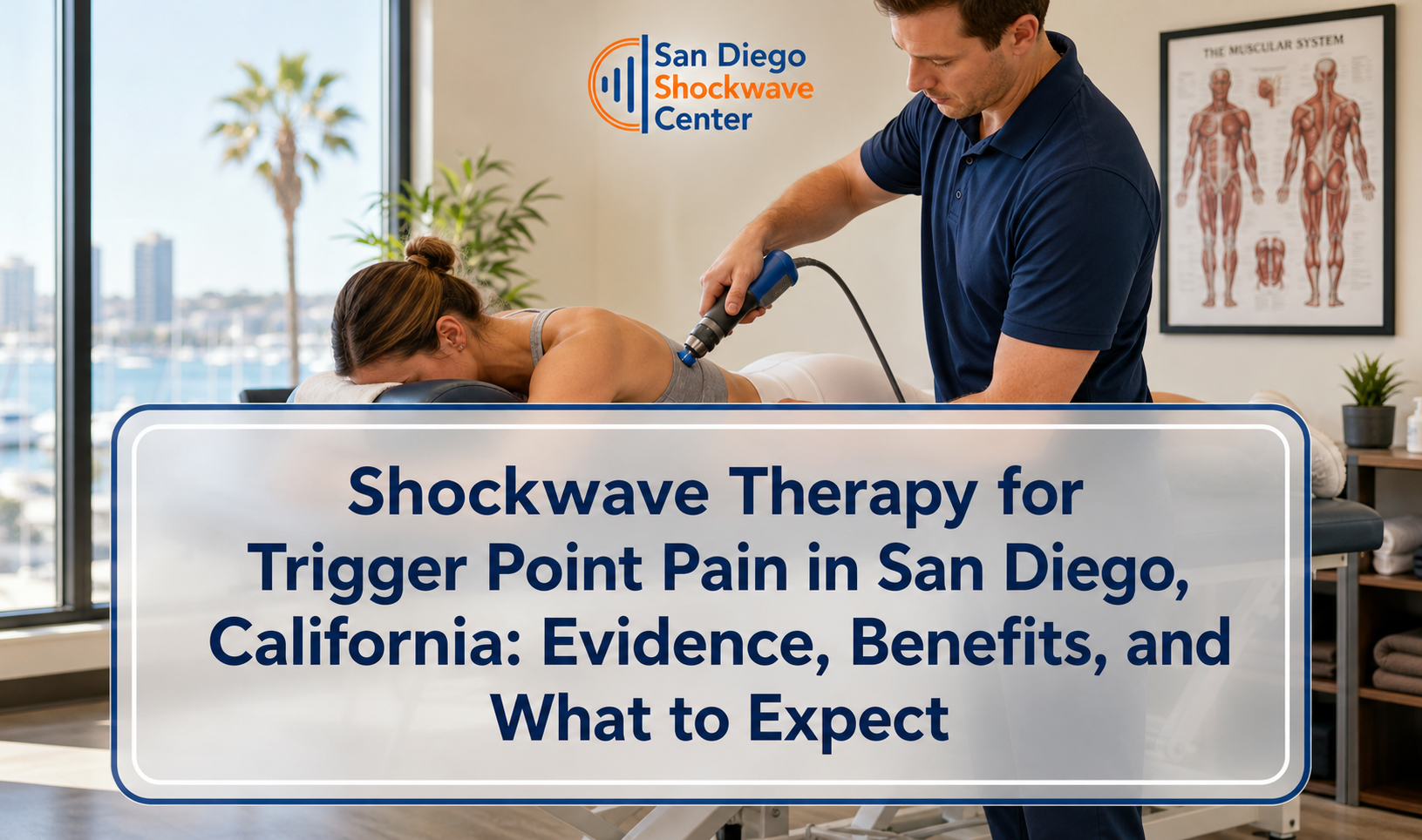
A shockwave session for trigger points typically feels like rhythmic tapping or pulses over a tender area, with intensity adjusted to stay tolerable. It’s normal to feel localized sensitivity during treatment and mild soreness for a day or two afterward.
A typical appointment begins with identifying the most symptomatic points and the movement patterns that reproduce symptoms. Gel is often applied, and treatment is delivered in a targeted region rather than across the entire muscle group.
- During treatment: You may feel sharp or intense pulses directly over the tender points; the clinician can adjust pressure, frequency, and intensity.
- Right after: Many people notice a temporary “looser” feeling or improved movement tolerance, though some feel tender.
- 24–72 hours: Post-treatment soreness is common, similar to deep tissue work; flare-ups should be discussed so settings and plan can be modified.
Because trigger point pain is often load-sensitive, what you do between visits can matter as much as the session itself. Many care plans emphasize hydration, gentle movement, and avoiding abrupt spikes in training intensity for a short window after treatment.
How many visits are commonly recommended for trigger points?
Many care plans use a short series of visits spaced across several weeks, then reassess based on pain sensitivity, range of motion, and functional tasks. The right number depends on how long symptoms have been present, how widespread the trigger points are, and whether contributing factors are being corrected.
Clinicians often reassess after the first 1–3 sessions to confirm that pain and movement are trending in the right direction. If there’s no meaningful change, it may be better to pivot—either changing parameters, adding other therapies, or reconsidering the diagnosis.
- Baseline assessment: Identify the main pain drivers, map referred pain patterns, and measure functional limits (turning the head, reaching overhead, squatting, running).
- Initial treatment phase: Treat the most provocative points first while introducing simple mobility and graded loading.
- Progress checks: Confirm that improvements transfer to real-life tasks, not just less tenderness on a table.
- Consolidation: Reduce reliance on passive care and prioritize exercise, technique changes, and maintenance strategies.
For a deeper explanation of scheduling logic and how clinicians often structure visit spacing, see how many shockwave sessions are typically recommended.
Shockwave therapy vs other trigger point options
Shockwave is one of several approaches for myofascial trigger points, and it’s often most helpful when paired with movement-based rehab. Comparing options can clarify when shockwave is the right fit and when a different tool may be better.
| Approach | Typical best-use scenario | San Diego-specific practicality |
|---|---|---|
| Shockwave therapy (focused or radial) | Stubborn, localized trigger point tenderness with movement restriction; when you need a non-injection option to help calm sensitivity and restore tolerance to loading | Often considered by active adults trying to stay training-consistent (running, surf, gym) while addressing recurring “knots” without downtime |
| Manual therapy (massage, myofascial release) | When short-term symptom relief is needed and the area responds well to hands-on pressure and tissue work | Commonly used for desk-related neck/shoulder tension, but benefits may fade if workstation setup and strength/endurance aren’t addressed |
| Dry needling (where offered) | Highly irritable points where needle-based techniques are appropriate and tolerated | Availability varies by provider credentials and setting; may cause short-lived soreness that affects training plans |
| Exercise-based rehab (mobility + strengthening) | Long-term fix for recurring trigger points driven by weakness, low endurance, or poor load management | Especially relevant for runners, hikers, and surfers—consistent programming helps prevent cycles of flare-ups |
| Ergonomics and workload modification | When symptoms correlate strongly with sitting, commuting, repetitive lifting, or sudden training-volume increases | Often critical for hybrid/remote workers and long commutes; small changes can reduce re-irritation between visits |
How shockwave fits into a complete care plan
Shockwave therapy tends to work best when it supports a broader strategy: reduce sensitivity, restore motion, then rebuild capacity. Treating trigger points without addressing contributing mechanics often leads to short-lived relief.
A common approach is to pair shockwave with targeted mobility and progressive strengthening for the involved region. For example, if upper-trapezius trigger points keep returning, the plan may also address thoracic mobility, scapular control, and workload pacing (keyboard time, overhead lifting volume, or swim/surf training frequency).
Common add-ons that improve durability of results
When the “why” behind the trigger point is addressed, improvements are more likely to hold between sessions. These add-ons are typically individualized based on exam findings.
- Movement retraining: Scapular control for shoulder/neck patterns, hip hinge mechanics for low-back patterns, or gait retraining for calf/foot overload.
- Graded loading: Slow resistance work and endurance-focused sets to improve tissue capacity without flare-ups.
- Mobility where it matters: Thoracic rotation/extension, hip extension, ankle dorsiflexion—only if limited and relevant.
- Recovery fundamentals: Sleep consistency, rest days, and smart training progressions to reduce ongoing sensitization.
If your symptoms overlap with tendon irritation (for example, Achilles or plantar fascia tightness alongside calf trigger points), you may also benefit from condition-specific education such as shockwave therapy basics and related condition pages.
Safety, risks, and who should avoid treatment
Shockwave is generally considered a low-risk non-surgical modality when appropriately screened, but it isn’t right for everyone. The most common side effects are temporary soreness, redness, or sensitivity at the treatment site.
Because shockwave influences local tissue and can be uncomfortable at higher intensities, clinicians typically screen for contraindications and modify settings for irritability and location. Always disclose medications, implants, and relevant medical history before starting.
- Common short-term effects: Tenderness, mild swelling, redness, bruising, temporary pain flare.
- Relative/possible reasons to postpone or avoid: Acute infection in the area, certain bleeding disorders or anticoagulant considerations, treatment over certain sensitive regions, or when pregnancy-related precautions apply (clinical judgment varies by region treated).
- When reevaluation is important: Progressive numbness/weakness, unexplained systemic symptoms, or pain patterns that don’t behave mechanically.
If you want a more detailed review of precautions and appropriate screening conversations, see the shockwave therapy safety guide.
How to choose a provider in San Diego for trigger point shockwave care
The best outcomes usually come from precise assessment, appropriate dosing, and a plan that builds lasting capacity—not just symptom chasing. When comparing options for shockwave therapy for trigger point pain San Diego, focus on clinical reasoning and follow-through rather than promises.
- Assessment quality: Look for a clear exam of movement, contributing joints, training/ergonomic drivers, and referral patterns.
- Device type and dosing logic: The clinician should explain why focused vs radial is chosen and how intensity will be progressed.
- Integration with rehab: Ask what you should do between visits (specific exercises, activity modifications, return-to-training guidelines).
- Outcome tracking: Pain is useful, but also track function (head rotation tolerance, overhead reach, squat depth, run mileage).
- Communication and boundaries: You should be told what to expect, what is normal after treatment, and when to report worsening symptoms.
Next steps: turning trigger point relief into lasting mobility
Shockwave can be a valuable bridge from persistent trigger point pain to more comfortable movement and strengthening, especially when symptoms have plateaued with basic care. The most durable results usually come from pairing treatment with a plan that improves tissue capacity and reduces the specific loads that keep the trigger points active.
If your trigger point pain seems connected to a broader pain picture—such as shoulder symptoms during lifting or knee discomfort that changes your gait—addressing the full chain matters. For example, if lower-body mechanics are contributing to recurring hip or thigh trigger points, exploring a targeted service like shockwave therapy for chronic knee pain may help you understand how shockwave is applied when adjacent joints and tendons influence muscular overload.
A good plan is measurable: less tenderness, more range of motion, better tolerance to your normal activities, and fewer flare-ups over time. If those benchmarks aren’t changing after a reasonable trial, it’s a sign to reassess the diagnosis, the dosing, or the overall strategy.
Frequently Asked Questions
Ready to address stubborn trigger point pain with a clear plan?
If recurring “knots” are limiting your neck, shoulder, back, hip, or calf mobility, a targeted shockwave approach may help reduce local sensitivity so you can move and train more comfortably. Reaching out is a practical next step when stretching, massage, or basic exercise hasn’t created lasting change.
An initial conversation can help you confirm whether shockwave is appropriate for your symptoms, understand what a session typically feels like, and review key precautions (such as bleeding-related considerations, infection, or treating around certain implants) so you can make an informed decision.