
Executive Summary
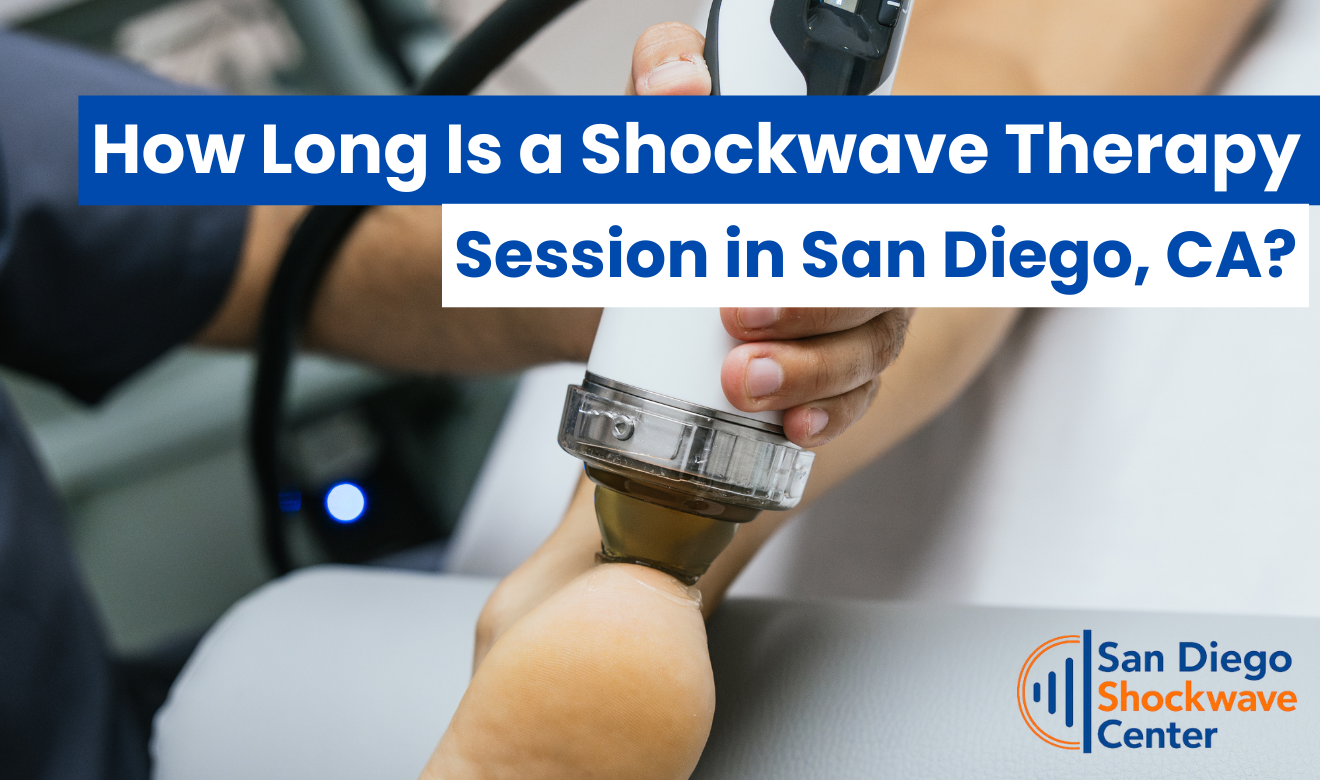
Shockwave therapy session length in San Diego is usually 15–30 minutes total, with the active shockwave portion typically lasting 5–15 minutes. Total appointment time varies based on evaluation needs, the body region treated, and whether one or multiple areas are addressed.
Key Takeaways
-
Most appointments are lunch-break friendly: Typical shockwave therapy visits in San Diego run about 15–30 minutes, making scheduling around work or training realistic.
-
Hands-on treatment is only part of the visit: The shockwave delivery itself often takes 5–15 minutes, with the remaining time used for check-in, targeting/setup, and wrap-up guidance.
-
Session length depends on clinical complexity: First visits, deeper/larger regions (like hip/glute), higher sensitivity, and reassessment needs commonly extend total time.
-
Two-area visits take longer but are common: Treating multiple sites in one appointment typically increases total time to about 25–40 minutes due to added setup and dosing.
-
Quality is driven by targeting and dosing, not time: Effective shockwave care emphasizes accurate tissue targeting and appropriate impulse/intensity dosing rather than longer sessions.
A typical shockwave therapy appointment in San Diego runs about 15 to 30 minutes, with the hands-on treatment portion often lasting around 5 to 15 minutes. That’s the usual shockwave therapy session length San Diego patients can expect, though it can be a bit longer for larger or multiple areas.
For example, if you’re treating plantar fasciitis, the actual shockwave work might take about 8 to 10 minutes, plus a few minutes for setup and checking your symptoms. If you’re coming in for tennis elbow, you might be in and out in roughly 20 minutes, especially if your provider reassesses pain and range of motion before and after.
If you’re treating two areas in one visit—like Achilles tendinopathy and calf tightness—plan closer to 25 to 40 minutes total. Most sessions are designed to fit into a lunch break, but your exact time depends on the condition, the area treated, and whether it’s your first visit.
What affects shockwave therapy session length in San Diego?
If you’re comparing clinics or trying to plan around work, it helps to know why shockwave therapy session length San Diego appointments vary. Most of the time difference comes from the clinical steps around the “active” shockwave portion.
Main factors that change appointment time
- New vs. returning patient: first visits typically include intake, a focused exam, and goal-setting, so the total time is longer.
- Body region and tissue depth: hips and glutes can take longer to position and treat than, say, a small point on the elbow.
- One site vs. multiple sites: treating two areas in one visit increases setup and dosing time.
- Type of shockwave: focused vs. radial devices can influence how many “passes” are used and how the provider targets the tissue.
- Reassessment needs: some visits include pre/post checks (pain scale, range of motion, functional tests).
- Comfort pacing: if sensitivity is high, providers may ramp intensity gradually, which can extend the visit slightly.
Net: shockwave therapy session length San Diego schedules are usually predictable, but they’re still tailored—especially when the provider is trying to hit the correct tissue depth and dosing while keeping you comfortable.
How a typical session is structured (minute-by-minute)
Most appointments follow a similar flow. If you’re trying to estimate shockwave therapy session length San Diego clinics book for your condition, this breakdown is a good mental model.
| Part of visit | What happens | Typical time |
|---|---|---|
| Check-in + brief symptom review | Confirm pain location, changes since last visit, activity load | 2–5 min |
| Targeting + setup | Positioning, palpation, marking tender points, gel application | 3–10 min |
| Hands-on shockwave treatment | Delivery of pulses to targeted tissues (may include multiple zones) | 5–15 min |
| Wrap-up + plan | Aftercare, activity guidance, scheduling, quick reassessment | 2–10 min |
That’s why shockwave therapy session length San Diego visits often land in the 15–30 minute range, even though the “shockwave time” itself is shorter.
What does the treatment feel like, and can that change the session length?
Yes. Comfort and tolerance can influence shockwave therapy session length San Diego appointments because some people need a slower ramp-up, especially on the first day.
Common sensations during shockwave
- A tapping or snapping feeling on the skin
- Localized tenderness over the injured tendon/attachment
- A deep ache that comes and goes as the provider moves across trigger points
If you want a deeper comfort walkthrough, this guide on whether shockwave therapy hurts explains what’s normal and what’s not.
Quick snippet-style answer: does it require downtime?
Most people return to normal daily activities immediately, but are advised to avoid “testing it” with max-intensity training for a short window (your provider will tailor this based on the tissue and severity).
Why providers keep the hands-on portion short (and why that’s a good thing)
People sometimes assume a longer session means better care, but with shockwave it’s more about accuracy and dosage than time. The goal is to deliver a targeted mechanical stimulus to the right tissue area—without over-irritating it.
Extracorporeal shockwave therapy is a recognized modality used across musculoskeletal care, and its applications have been described in medical references such as extracorporeal shockwave therapy.
What research and clinical practice support
- Dosing matters: sessions are commonly built around a specific number of impulses (“pulses”) and intensity rather than “treating for 30 minutes no matter what.”
- Targeting matters: taking time to locate the most symptomatic points can be more important than extending treatment time.
- Response builds over time: symptom change is often progressive across a series—so each shockwave therapy session length San Diego visit is one step in a broader plan.
What to expect for different conditions (San Diego time planning)
Below are realistic planning ranges for shockwave therapy session length San Diego appointments by common complaint. These ranges assume a returning patient; first visits may run longer.
Typical time ranges by area
- Plantar fasciitis: ~15–25 minutes total (often ~8–10 minutes active shockwave)
- Achilles tendinopathy: ~20–30 minutes total (more positioning and multiple tender zones)
- Tennis elbow / golfer’s elbow: ~15–25 minutes total
- Patellar tendinopathy (jumper’s knee): ~20–30 minutes total
- Shoulder tendinopathy/calcific issues: ~20–35 minutes total depending on complexity
- Two areas in one visit: ~25–40 minutes total
If knee symptoms are your main issue, you can also review condition-specific expectations in shockwave therapy for knee pain.
How many visits are typical, and how that affects your scheduling
Most people asking about shockwave therapy session length San Diego also want to know the bigger time commitment across a full plan of care.
Common scheduling pattern
- Frequency: commonly once per week (varies by provider and tissue)
- Series length: often multiple sessions, with reassessment along the way
- Visit duration consistency: once you’re past the first visit, your shockwave therapy session length San Diego appointment time is usually very consistent week to week
For a more detailed breakdown of visit counts, see how many shockwave sessions are typical.
Cost: does a longer session mean a higher price in San Diego?
Not always. Some clinics price per session, others price by body region, and some adjust cost when two areas are treated in one visit. Because shockwave therapy session length San Diego can vary, it’s smart to ask how pricing is structured rather than assume it’s “per minute.”
Questions to ask when comparing clinics
- Is pricing per session or per area?
- Is there an added fee for a second area in the same visit?
- Does the initial evaluation cost more than follow-ups?
- What’s included (reassessment, home plan, activity modification guidance)?
Many people also find it helpful to read a local pricing overview before booking; this resource on shockwave therapy cost explains common pricing models.
How to make your session faster (without cutting corners)
If you’re trying to keep shockwave therapy session length San Diego visits reliably within a lunch break, a little prep helps.
Before you arrive
- Wear accessible clothing: shorts for knee/Achilles, tank top for shoulder, etc.
- Know your top 1–2 pain points: “outside heel” vs. “entire foot” speeds up targeting.
- Track changes since last visit: morning pain, activity tolerance, and any flare triggers.
- Arrive a few minutes early: reduces rushed setup and improves accuracy.
During the session
- Give real-time feedback: tell the provider when they hit the “right spot.”
- Don’t brace: relaxed positioning helps consistent contact and faster completion.
These steps don’t just shorten shockwave therapy session length San Diego appointments—they also improve treatment precision.
What to do after your appointment (so you don’t lose progress)
Post-visit behavior can influence how quickly you feel results across the series, even though it doesn’t change shockwave therapy session length San Diego itself.
Common aftercare principles
- Manage training load: avoid sudden spikes in running, jumping, or heavy eccentrics right after treatment unless directed.
- Keep moving: gentle walking and normal daily activity are often fine.
- Follow your rehab plan: shockwave is often paired with progressive loading, mobility, and biomechanics work.
For a practical overview of pacing, soreness expectations, and training adjustments, see shockwave therapy recovery basics.
What shockwave therapy is (and why it’s used for stubborn tendon pain)
If you’re still deciding whether the appointment time is “worth it,” it helps to understand what the modality is designed to do. Shockwave is commonly used when tendon and fascia pain has lingered and isn’t responding to basic rest-only approaches.
You can read a plain-English overview of what shockwave therapy is, including how it differs from passive modalities.
Snippet-style takeaway
In many cases, the benefit comes from delivering a targeted stimulus to promote tissue remodeling and pain modulation—so short, repeatable sessions are often the point.
Real-world evidence: what outcomes research suggests (in plain language)
High-quality studies and systematic reviews have reported clinically meaningful improvements for certain chronic tendon and heel pain conditions treated with shockwave, particularly chronic plantar heel pain/plantar fasciitis and some tendinopathies. Outcomes depend on correct diagnosis, dosing, and pairing with progressive rehab.
Two quick examples (typical clinic scenarios)
- Chronic plantar heel pain: People who’ve had symptoms for months often notice gradual improvement across a multi-visit plan, with better morning comfort and walking tolerance as loading is reintroduced.
- Lateral elbow pain (tennis elbow): Symptom irritability often decreases over time, allowing progressive gripping and lifting to return without sharp flare-ups.
These kinds of improvements don’t require long appointments—just consistent, well-targeted visits—so shockwave therapy session length San Diego is usually short and repeatable by design.
Green flags that your appointment time is being used well
When evaluating shockwave therapy session length San Diego scheduling, look for clinical behaviors that signal quality—not just speed.
What good care typically includes
- Confirming the diagnosis (or referring out if symptoms don’t fit a musculoskeletal pattern)
- Clear dosing strategy and a plan for progression across sessions
- Functional reassessment (even brief) to ensure you’re trending the right direction
- Load management guidance so you don’t undo gains between visits
If all of that is happening, a 15–30 minute shockwave therapy session length San Diego visit is often plenty.
Last word: make the session fit your life, not the other way around
The practical takeaway is that shockwave therapy session length San Diego appointments are typically short enough to fit into a workday, while still being structured and outcome-focused. Plan on ~15–30 minutes for most single-area follow-ups, a bit longer for first visits or two-area treatments, and expect the “active” shockwave portion to be only part of the total.
From an industry standpoint, shockwave is commonly delivered by licensed clinicians (such as physical therapists, chiropractors, and sports-medicine providers) who are trained in musculoskeletal assessment, differential diagnosis, and progressive loading principles—skills that matter as much as the device itself when you’re trying to get results efficiently within your shockwave therapy session length San Diego visit.
Frequently Asked Questions
Ready to Book a Shockwave Session That Actually Fits Your Schedule?
If you’re looking for a shockwave therapy appointment in San Diego that’s efficient, targeted, and built around real results (not wasted time), San Diego Shockwave Therapy Center makes it easy to get started. Book your visit, get a clear plan for your condition, and keep your sessions lunch-break friendly—without cutting corners.