
Executive Summary
Shockwave therapy (ESWT) is presented as an effective next-step, non-surgical option for chronic tennis elbow when rest and basic rehab haven’t restored function. The article emphasizes that outcomes are best when ESWT is paired with accurate diagnosis, appropriate dosing, and progressive strengthening—while total plan structure largely determines overall cost in San Diego.
Key Takeaways
- Best Fit for Chronic Cases: ESWT is most commonly recommended when symptoms persist 6–12+ weeks and conservative care hasn’t resolved pain or grip limitations.
- Mechanism: Pain Modulation + Tendon Remodeling: Shockwave delivers acoustic energy that may reduce pain sensitivity and stimulate tendon healing, helping break the cycle that prevents effective loading.
- Typical Plan = 3–6 Sessions: Most protocols use a short series of weekly sessions, with progress often tracked through improved gripping, lifting, typing tolerance, and sport-specific function.
- Cost Depends on the Total Plan, Not Just Per-Visit Pricing: “Tennis elbow shockwave therapy San Diego cost” varies mainly by session count, focused vs radial device type, provider expertise, and what’s bundled (evaluation, rehab, follow-ups).
- Results Improve When Combined with Progressive Rehab: ESWT is positioned as most effective when it enables graded strengthening and return-to-activity planning, rather than serving as a stand-alone passive treatment.
Yes—shockwave therapy can be effective for tennis elbow, especially when rest, braces, and basic exercises haven’t solved the pain. It works by sending targeted sound waves into the irritated tendon to stimulate healing, reduce sensitivity, and improve function over a series of visits.
For example, if gripping a coffee mug, shaking hands, or lifting a grocery bag triggers sharp outer-elbow pain, shockwave sessions may help make those daily movements more comfortable over time. If you play tennis or pickleball and your backhand or paddle swing keeps flaring up the tendon, this treatment is often used to calm the area down while you rebuild strength.
If you’re also wondering about tennis elbow shockwave therapy san diego cost, it typically depends on how many sessions you need, the device used, and whether your plan covers any portion of care. Many people do a short treatment plan and track progress by how quickly they can return to typing, lifting, or sports without the familiar sting.
What Is Shockwave Therapy for Tennis Elbow (and why it’s used)
Tennis elbow (lateral epicondylalgia) is usually a tendon overload problem at the outer elbow—most often involving the extensor carpi radialis brevis (ECRB) tendon. Over time, the tendon can develop degenerative changes (tendinosis) rather than classic “inflammation,” which is one reason rest and anti-inflammatories don’t always fix it.
Extracorporeal shockwave therapy (ESWT) uses acoustic (sound) waves delivered through the skin to the painful tendon area. In clinical practice, it’s commonly chosen when:
- Symptoms have lasted 6–12+ weeks (or longer)
- Home care and basic rehab haven’t restored function
- You want to avoid injections or surgery, if possible
When people search tennis elbow shockwave therapy san diego cost, they’re typically weighing whether ESWT is worth it compared with PT, injections, or just “waiting it out.” Cost matters—but so does time to relief, durability of results, and how quickly you can grip, lift, type, or play again.
How Shockwave Therapy Works for Tennis Elbow
Shockwave therapy is thought to help tendinopathy through several biological and neurological effects. The exact mechanisms are still being studied, but research commonly describes:
- Pain modulation: reducing local pain sensitivity and changing how pain signals are processed
- Stimulating tissue repair: promoting microcirculation and cellular activity involved in tendon remodeling
- Breaking the chronic pain cycle: allowing you to tolerate loading/strengthening that actually rebuilds the tendon
Two common device types are used:
- Focused ESWT: concentrates energy deeper and more precisely
- Radial pressure wave therapy (often called “radial shockwave”): disperses energy more broadly and superficially
This is also why tennis elbow shockwave therapy san diego cost can vary: focused systems and higher-energy protocols may be priced differently than radial systems, and the plan length may differ.
What the Research Says (real-world evidence you can cite)
Overall, the medical literature suggests ESWT can help some people with chronic tennis elbow—especially when combined with progressive loading exercises. Results vary depending on energy levels, dosing, chronicity, and the comparator treatment.
- Systematic reviews have reported that ESWT can improve pain and function in lateral epicondylalgia, particularly in chronic cases and when appropriate dosing parameters are used. (For example, multiple reviews in sports medicine and orthopedic journals note clinically meaningful improvements in subsets of patients.)
- Clinical guidelines often place ESWT as a non-surgical option after initial conservative care fails—alongside structured rehab and activity modification.
A practical takeaway: if your symptoms are truly tendon-driven (not primarily nerve irritation from the neck, not arthritis, not referred pain), ESWT is one of the more common “next-step” tools before considering injections or surgical referral.
And yes—people commonly ask tennis elbow shockwave therapy san diego cost right after they ask, “Will it actually work for me?” The best predictor is usually a good diagnosis plus a plan that includes strength progression (not just passive treatments).
How Many Sessions You Might Need (and what each visit looks like)
Most protocols for tennis elbow use a short series of treatments rather than a single visit. A common plan is 3–6 sessions, often spaced about 1 week apart, depending on symptom severity and response.
During a typical session:
- The tender area is located (sometimes with movement testing and palpation)
- Gel is applied to improve energy transmission
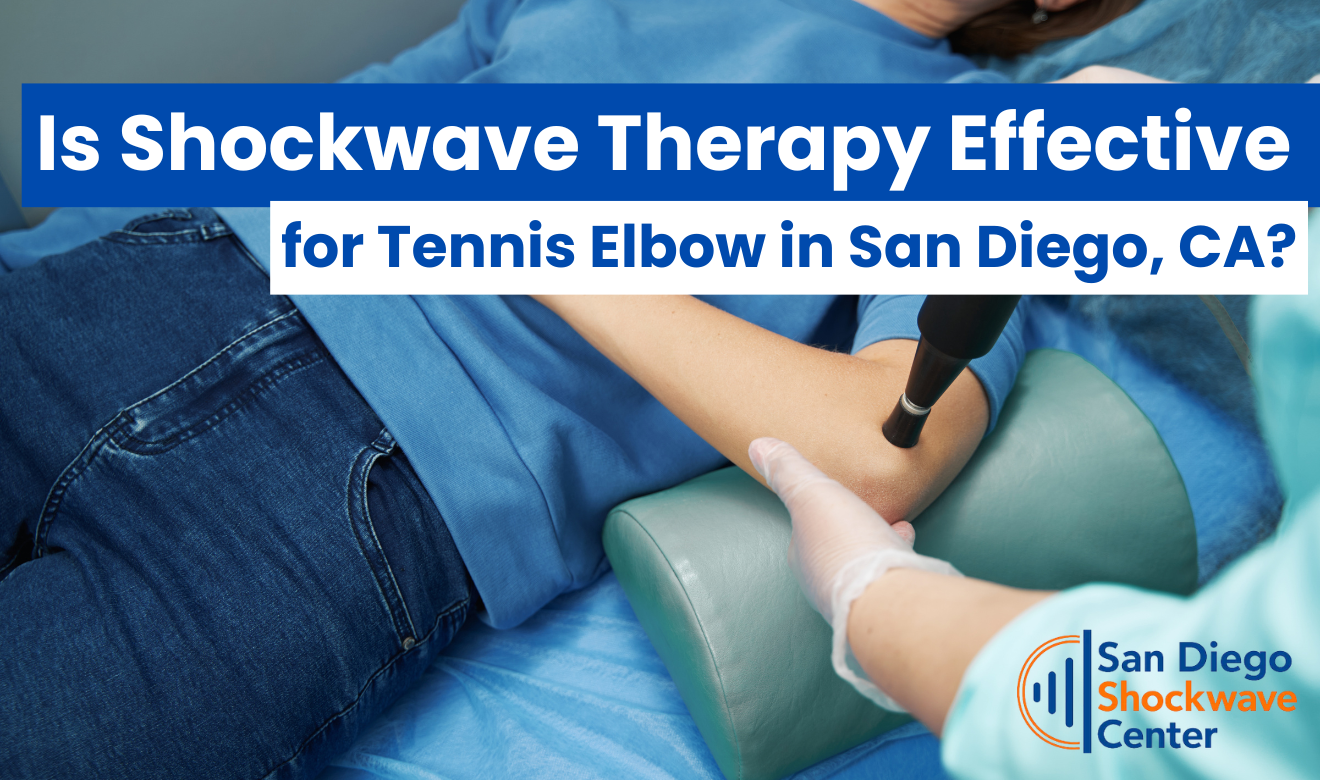
- The device delivers pulses for several minutes
- You’re usually sent home with guidance on relative rest, then gradual loading
If you want specifics on session planning, you can also read about how many shockwave sessions are commonly recommended—because the number of visits is one of the biggest drivers of tennis elbow shockwave therapy san diego cost.
Does It Hurt? What It Feels Like (and how soreness is managed)
Shockwave is not usually described as “pain-free,” but it should be tolerable. Many patients describe it as:
- Intense tapping or snapping
- Localized discomfort over the tendon
- A “hurts-so-good” feeling that eases as the area desensitizes
Afterward, mild soreness for 24–48 hours is common—similar to how a tendon can feel after a heavy rehab session. Most plans advise temporarily reducing aggravating gripping/lifting, then reintroducing tendon loading progressively.
If you’re comparing value and wondering whether discomfort is “worth it,” that’s part of the tennis elbow shockwave therapy san diego cost decision too: some people prefer a short series of mildly uncomfortable treatments over repeated injections or months of persistent flare-ups.
Cost: Tennis Elbow Shockwave Therapy San Diego Cost (what you’re really paying for)
Tennis elbow shockwave therapy san diego cost varies widely by clinic, device type, session length, and what’s bundled (evaluation, rehab instruction, follow-ups). In many U.S. markets, shockwave is commonly offered as a cash-pay service, though coverage can vary.
Here are the biggest cost drivers:
- Number of sessions (often 3–6)
- Technology used (focused vs radial)
- Provider expertise and assessment time (quality diagnosis matters for outcomes)
- What’s included: rehab plan, follow-up testing, or add-on therapies
To understand pricing factors in more detail, this overview of shockwave therapy cost breaks down what typically influences totals—useful context when you’re specifically researching tennis elbow shockwave therapy san diego cost.
Quick cost framework (so you can estimate realistically)
While exact prices are clinic-specific, you can estimate your overall out-of-pocket by thinking in “plan totals”:
- Low end: fewer sessions + simpler protocol
- Middle: standard 3–6 sessions, typical for chronic tennis elbow
- Higher end: more sessions, higher-energy focused ESWT, or bundled rehab services
When comparing tennis elbow shockwave therapy san diego cost across options, ask for the total plan estimate (not just per-session price), and ask what’s included.
Why Some People Don’t Improve (and how to increase your odds)
Not all outer-elbow pain is the same problem. If ESWT doesn’t help, the issue is often one of these:
- Diagnosis mismatch: referred pain from the neck/shoulder, radial nerve irritation, or joint issues masquerading as tennis elbow
- Load not corrected: continuing the same high-grip activities without modifying volume or mechanics
- No progressive strengthening: tendons usually need graded loading (especially eccentric/concentric wrist extensor work)
- Too early, too irritated: highly reactive tendons may need a calmer baseline before higher-energy work
In other words, tennis elbow shockwave therapy san diego cost isn’t just a “price question”—it’s a “plan quality” question. The best outcomes typically come from ESWT paired with a clear return-to-activity progression.
How to Combine Shockwave with Rehab (sample progression)
Shockwave works best when it helps you tolerate the exercises that rebuild capacity. A common, tendon-friendly progression looks like:
Step 1: Reduce flare triggers (first 1–2 weeks)
- Temporarily cut back on painful gripping and repetitive wrist extension
- Use lighter loads or neutral-grip tools when possible
- Short, frequent breaks from typing/mousing if it provokes pain
Step 2: Isometrics for pain control
- Wrist extension isometrics (pain-guided)
- Forearm pronation/supination isometrics
Step 3: Progressive strengthening (often weeks 2–6+)
- Eccentric and concentric wrist extensor loading
- Grip strengthening in tolerable ranges
- Shoulder/scapular strengthening to reduce elbow strain
Step 4: Return to sport or work demands
- Graduated hitting/paddle drills or work-simulation tasks
- Technique adjustments (grip size, string tension, tool ergonomics)
If you’re comparing ESWT vs standard rehab, reading about shockwave vs physical therapy can help clarify what each approach does best—and how that affects tennis elbow shockwave therapy san diego cost when you factor in time and number of visits.
What to Ask a Provider Before You Pay (to protect your results)
Before committing—especially if you’re focused on tennis elbow shockwave therapy san diego cost—use these screening questions:
- What diagnosis are you treating? (Ask how they ruled out nerve involvement or referred pain.)
- Focused or radial—why? (They should explain the reasoning, not just the device.)
- What parameters are you using? (Energy level, number of pulses, frequency, schedule.)
- What’s the full plan cost? (Evaluation + number of sessions + any rechecks.)
- What should I do between sessions? (A basic strengthening plan should be included.)
- How will we measure progress? (Grip strength, pain with resisted wrist extension, functional tasks.)
This matters because two clinics can quote the same tennis elbow shockwave therapy san diego cost, but deliver very different clinical value depending on assessment quality and rehab integration.
Safety: Who Should Avoid Shockwave (or get clearance first)
Shockwave is generally considered safe when appropriately applied, but it’s not for everyone. A safety-minded provider will screen for common contraindications and precautions such as:
- Pregnancy (avoid treating near the trunk; many clinics avoid ESWT during pregnancy altogether)
- Bleeding disorders or anticoagulant use (requires clinical judgment)
- Local infection, tumor, or open wounds in the treatment area
- Recent corticosteroid injection at the site (often delayed due to tissue considerations)
- Unclear diagnosis with concerning red flags
If you want a deeper overview of precautions and what “safe application” looks like, this shockwave therapy safety guide is a helpful reference. Safety screening is also part of what you’re paying for when evaluating tennis elbow shockwave therapy san diego cost.
What Results to Expect (timeline and realistic milestones)
Most people don’t feel “fixed” after one session. A common improvement pattern is:
- Early phase (1–2 weeks): reduced tenderness, less sharp pain with daily tasks
- Mid phase (3–6 weeks): improved grip tolerance, fewer flare-ups, better workout tolerance
- Later phase (6–12 weeks): stronger tendon capacity and more durable return to sport/work loads
Two simple milestones many patients track:
- Can you lift a grocery bag or pan without a “sting”?
- Can you do repeated gripping (tennis, pickleball, tools, weights) without a next-day flare?
When you’re weighing tennis elbow shockwave therapy san diego cost, it helps to compare the total time-to-function—not just dollars per visit.
Service Option to Learn More About the Treatment (overview)
If you want a clear primer on the treatment itself—what it is, how it’s delivered, and what it’s typically used for—see this overview of shockwave therapy. Understanding the fundamentals makes it easier to compare tennis elbow shockwave therapy san diego cost across clinics and protocols.
Bottom Line: Spend Smarter, Heal Faster
Tennis elbow shockwave therapy san diego cost is ultimately about value: a targeted treatment plan that improves function and reduces pain enough to let you reload the tendon safely. The best outcomes usually come from three things working together:
- Accurate diagnosis (confirm it’s true lateral epicondylalgia)
- Appropriate ESWT dosing (device + parameters matched to your case)
- Progressive strengthening and return-to-activity plan (so results hold)
From an industry standpoint, ESWT is most often delivered by licensed clinicians (such as physical therapists, sports medicine providers, chiropractors, or physicians) who routinely treat tendinopathies and can differentiate tendon pain from nerve or joint-driven pain. Look for a provider who can document functional testing, explain the protocol clearly, and integrate load management—because that’s what turns tennis elbow shockwave therapy san diego cost into a worthwhile investment rather than just another expense.
Frequently Asked Questions
Ready to Get a Grip on Tennis Elbow Pain?
If tennis elbow is making everyday things—like lifting, typing, or playing pickleball—feel like a constant setback, it’s time for a plan that actually moves the needle. At San Diego Shockwave Therapy Center, we’ll help confirm what’s really driving your outer-elbow pain, map out a smart shockwave therapy plan, and pair it with the right strengthening so your results have a better chance of sticking.